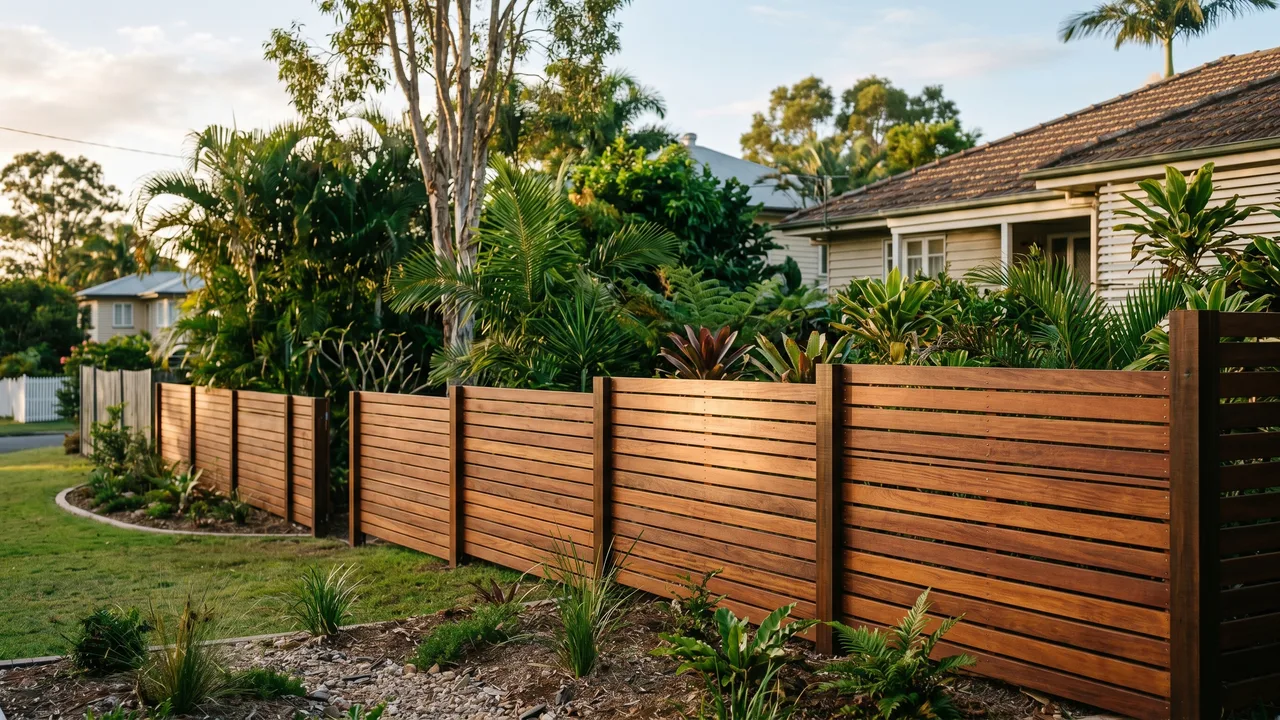
Fencing
Timber Fencing.
Timber Fencing in Indooroopilly
Timber fencing is one of the most common requests we see across Indooroopilly and the surrounding suburbs. It suits the character of the area well. Many blocks here have older Queenslander homes with established gardens, and a timber fence fits that streetscape in a way steel panels often don't.
This page covers what the work actually involves, what it costs in Brisbane, and how to work out whether timber is the right call for your property.
What the Work Involves
A timber fencing installation starts with a site inspection to check the boundary line, soil type, and any level changes across the block. Indooroopilly blocks are often sloped, so stepped or raked fence runs are common.
The installer will typically:
- Set hardwood or treated pine posts in concrete footings (depth varies by post height and soil)
- Attach rails (horizontal bearers) between posts
- Fix palings, pickets, or lapped boards to the rails
- Apply a first coat of preservative oil or stain if it's part of the quote (confirm this upfront)
Hardwood options used in Brisbane typically include spotted gum, ironbark, and grey gum. These are dense, durable timbers that handle Queensland humidity well. Treated pine (H4 or H5 rated for in-ground contact) costs less and is fine for most residential fences, though it will need re-oiling every few years to stay looking good.
For a standard 1.8-metre privacy fence, expect the posts to go about 600 mm into the ground for shorter runs, deeper on anything taller or more exposed.
When Do You Actually Need a New Timber Fence?
The signs aren't always dramatic. Look for:
- Posts that lean or rock when you push them (the base has likely rotted or the concrete footing has cracked)
- Palings that split, bow, or fall away from the rails
- Rails that sag in the middle between posts
- Fence lines that shift noticeably after a storm
- Timber that's gone grey, soft, or spongy to the touch
Brisbane's subtropical climate is hard on untreated or poorly maintained timber. The wet season (roughly November to March) accelerates rot, especially at the base of posts. In suburbs like Sherwood, Graceville, and Chelmer, where large trees are common, roots can also push footings out of alignment over time.
If your fence is more than 15 to 20 years old and hasn't been regularly oiled or stained, replacement is usually more cost-effective than ongoing repairs.
What It Costs in Brisbane
Timber fencing typically runs between $150 and $320 per lineal metre installed in the Brisbane metro area. Your total will depend on:
- Timber species: Hardwood costs more than treated pine, sometimes significantly
- Fence height: Taller fences need longer posts, more rails, and more labour
- Site conditions: Sloped blocks, rocky soil, or restricted access adds time and cost
- Gate inclusion: A single gate adds roughly $400 to $900 depending on style and hardware
- Run length: Shorter jobs often carry a minimum call-out component, so very short runs (under 10 metres) can feel expensive per metre
For a mid-range job, say 20 to 30 lineal metres of 1.8-metre hardwood privacy fence on a reasonably flat block, you're typically looking at $4,000 to $8,000 all in. That puts it comfortably within the $2,000 to $15,000 range we see across our local jobs.
What's Usually in the Quote (and What Isn't)
A standard quote from a Brisbane fencer typically includes:
- Supply and installation of posts, rails, and palings
- Concrete for footings
- Removal and disposal of the old fence (confirm this, it's not always included)
It often does not include:
- Surveying the boundary line (your responsibility, or a separate cost)
- Staining or sealing beyond a first coat
- Tree root removal or significant earthworks
- Council permits if required (unusual for standard residential fencing, but check for front boundary fences over certain heights)
Ask the installer to itemise these clearly before you sign anything.
Is Timber Right for Your Property?
Timber makes sense if you want a natural look, need to match an existing fence style, or are working with a heritage-style home common in St Lucia, Chelmer, and Indooroopilly itself. It's also flexible, easy to cut around irregular boundaries and easier for future repairs than steel panels.
The honest trade-off: timber needs maintenance. Plan to re-oil or re-stain every two to three years. If you'd rather not think about it, Colorbond or aluminium fencing will ask less of you over time.
A Note on Licencing and Insurance
In Queensland, fencing work over certain values requires the contractor to hold a valid QBCC (Queensland Building and Construction Commission) licence. Before any work starts, ask to see the installer's QBCC licence number and confirm they carry public liability insurance. This protects you if something goes wrong on site. It's a standard ask and any legitimate tradesperson will expect it.
We connect you with local fence installers who meet these requirements. If you'd like an obligation-free quote on a timber fence in Indooroopilly or nearby, get in touch and we'll put you in contact with someone who can assess your block in person.
Quick answers
Frequently asked.
How long does a timber fence last in Brisbane's climate?
Do I need council approval for a new timber fence in Indooroopilly?
What's the difference between hardwood and treated pine fencing?
Who is responsible for a fence on a shared boundary?
Can a timber fence be installed on a sloped block?
How do I get an accurate quote for my timber fence?
Ready to book
Quickest is by phone.
Up-front pricing on the call. Booked in one go. No site visit needed.