Fencing
Pool Fencing.
Pool Fencing in Indooroopilly
A pool fence is not optional in Queensland. If you have a swimming pool or spa on your property, you are legally required to have a compliant barrier around it. That applies whether you are in Indooroopilly, Taringa, Chelmer or any of the surrounding suburbs. This page covers what a proper pool fencing installation actually involves, what it costs in Brisbane, and how to tell whether your current barrier is putting you at risk.
What the Work Actually Involves
Pool fencing is more technical than a standard boundary fence. The installer needs to work to the Queensland Development Code (QDC) Mandatory Part 3.4 and the Australian Standard AS 1926.1-2012, which govern barrier height, gate self-closing mechanisms, latch placement, climbability, and the non-climbable zone (NCZ) around the perimeter.
In practical terms, the job typically includes:
- Site assessment to map the pool boundary, note ground level changes, and identify any structures (sheds, retaining walls, pergolas) that interact with the barrier zone
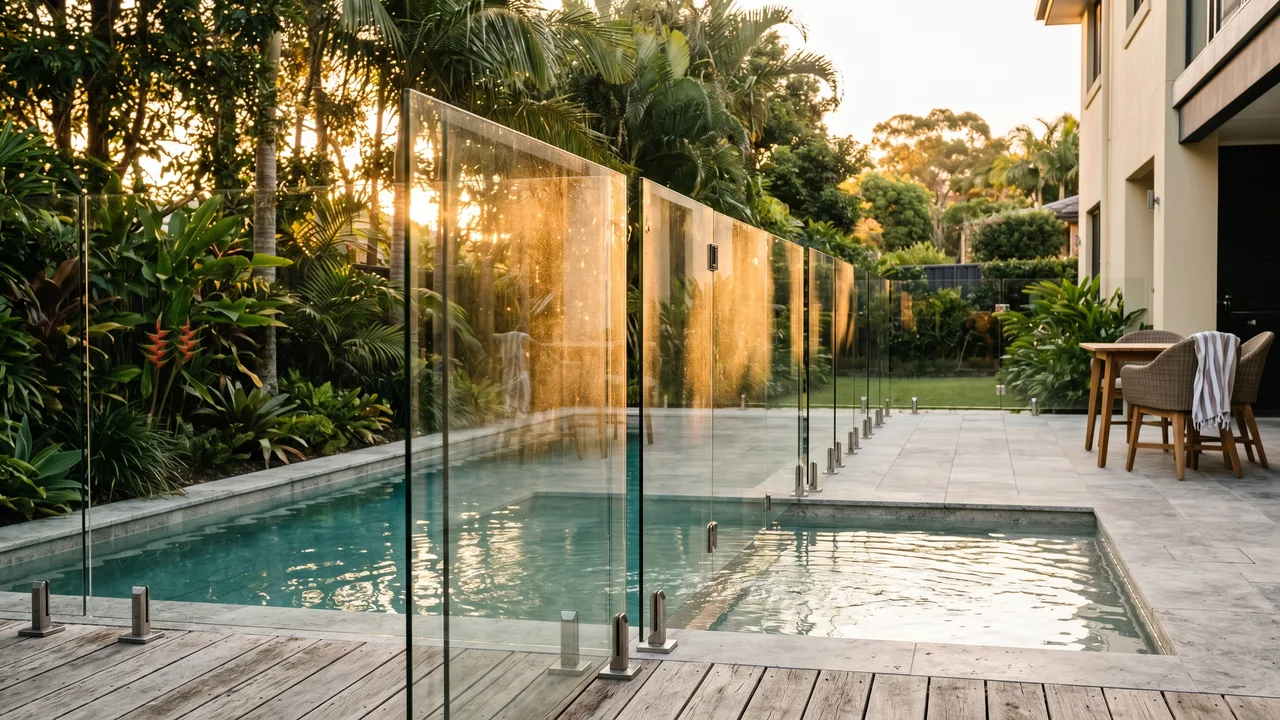
- Material selection - most Indooroopilly jobs use frameless or semi-frameless toughened glass, or powder-coated aluminium pool panels; both are compliant options with different cost and maintenance profiles
- Post setting - glass spigots are either core-drilled into concrete surrounds or set into ground posts; aluminium panel systems use driven or concreted posts
- Gate installation - every pool barrier needs at least one self-closing, self-latching gate opening away from the pool; this is a common compliance failure point on older fences
- Certification - in Queensland, a building certifier (not the installer) signs off the barrier with a Form 17 approval; some installers can arrange this as part of the package, others hand that to you
The physical work on a standard Indooroopilly block typically takes one to two days. Older Queenslander-style properties with raised timber decking or irregular yard levels take longer because the barrier needs to follow grade changes while staying within the allowable gap tolerances at the base.
When You Need It
The obvious trigger is a new pool installation. But there are several other situations where you may need work done:
- Your current fence was installed before modern standards and has not been updated
- You are selling the property and a conveyancing search flags the barrier as non-compliant
- The council or a certifier has issued a notice following an inspection
- Timber or older aluminium components have rotted, corroded or warped enough to create gaps above the 100mm limit at the base
- A gate is no longer self-closing, or the latch can be reached by a child
Seasonal weather in Brisbane does accelerate some of this. The wet season (roughly November to March) puts stress on timber gates and can cause posts to shift in clay-heavy soils, which are common across Indooroopilly and Graceville. If your gate stops closing properly after summer rain, that is worth checking before you assume it is just a hinge problem.
What It Costs in Brisbane
For a typical residential pool in the Inner West, you are generally looking at:
- Frameless glass: $700 to $1,100 per lineal metre, depending on panel size, spigot type and ground conditions
- Semi-frameless glass: $500 to $800 per lineal metre
- Powder-coated aluminium panels: $250 to $500 per lineal metre
A standard backyard pool might need 15 to 25 lineal metres of barrier, which puts most jobs somewhere between $4,000 and $18,000 all up. That is a wide range, so treat it as an orientation figure rather than a quote.
What typically moves the price:
- Sloped ground (common on blocks in Sherwood, Corinda and the steeper parts of Indooroopilly) adds complexity and cost
- More than one gate multiplies the hardware cost
- Existing concrete requiring core drilling versus new post footings
- Whether certification is bundled in or arranged separately
- Glass thickness (most residential installations use 10 to 12mm toughened glass)
What Is Usually Included (and What Is Not)
A standard quote from a pool fencing installer typically covers materials, posts, panels or glass, one gate with hardware, and labour for installation.
What often costs extra, or at least needs to be confirmed upfront:
- Building certification (Form 17) - sometimes bundled, sometimes a separate $200 to $400 fee
- Removal and disposal of an existing non-compliant fence
- Concreting if the existing surrounds need repair before posts can go in
- Any landscaping or garden relocation needed to clear the NCZ
Ask the installer to specify these items in writing before you agree to a price.
Is This the Right Service for Your Property?
Pool fencing is the right call if you have a pool or spa and any of the following apply: no existing barrier, a barrier that is over 15 years old, visible damage, or a compliance notice. If your fence is structurally sound and was recently certified, a repair or gate replacement might be all you need (that falls under our fence repair service rather than a full install).
If you are unsure, the installer will typically assess this during the initial site visit at no charge.
A Note on Qualifications and Compliance
Queensland pool fencing must be certified by a licensed building certifier, not just signed off by the installer. The installer's job is to build the barrier to spec; the certifier's job is to confirm it meets the code. Make sure you receive a copy of the Form 17 certificate after the job is done. That document is yours to keep and will be needed when you sell.
The providers we connect homeowners with hold the appropriate Queensland Building and Construction Commission (QBCC) licences for this type of work. If you want to verify a contractor's licence independently, the QBCC licence register is a public tool.
If you want a realistic quote for your block, describe your pool surrounds and we will match you with a local installer who can do a proper site assessment. A phone call is usually enough to get started.
Quick answers
Frequently asked.
Does my pool fence need to be certified by a building certifier in Queensland?
What is the difference between frameless and semi-frameless glass pool fencing?
How much does pool fencing typically cost in Brisbane's Inner West?
Can I use an existing wall or fence as part of my pool barrier?
My pool gate is not self-closing properly. Do I need a full new fence?
How long does a pool fencing installation take in Indooroopilly?
Ready to book
Quickest is by phone.
Up-front pricing on the call. Booked in one go. No site visit needed.