Fencing guide
Timber or Colorbond: which fence suits Brisbane western suburb blocks?
Timber or Colorbond: Which Fence Suits Brisbane Western Suburb Blocks?
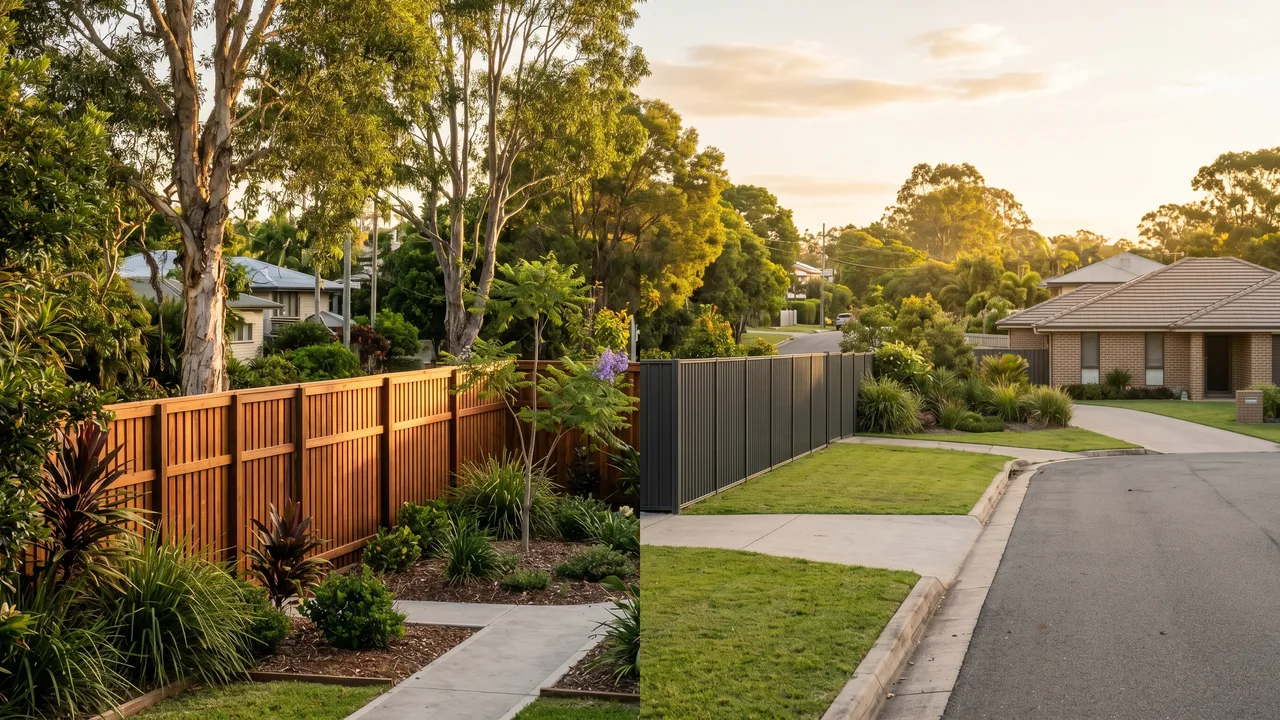
For most blocks in the western suburbs, Colorbond is the more practical long-term choice. But timber is not wrong, and on certain blocks, particularly older Queenslander lots in Chelmer or Graceville, it can look considerably better. The honest answer depends on your block's slope, your soil, how much maintenance you're prepared to do, and what your neighbours already have.
Here's a thorough look at both options so you can make a sensible call.
The Western Suburbs Context: Why Your Block Type Matters
The cluster of suburbs stretching from Indooroopilly and Taringa through to Moorooka and Fairfield shares a few common characteristics that directly affect fencing decisions.
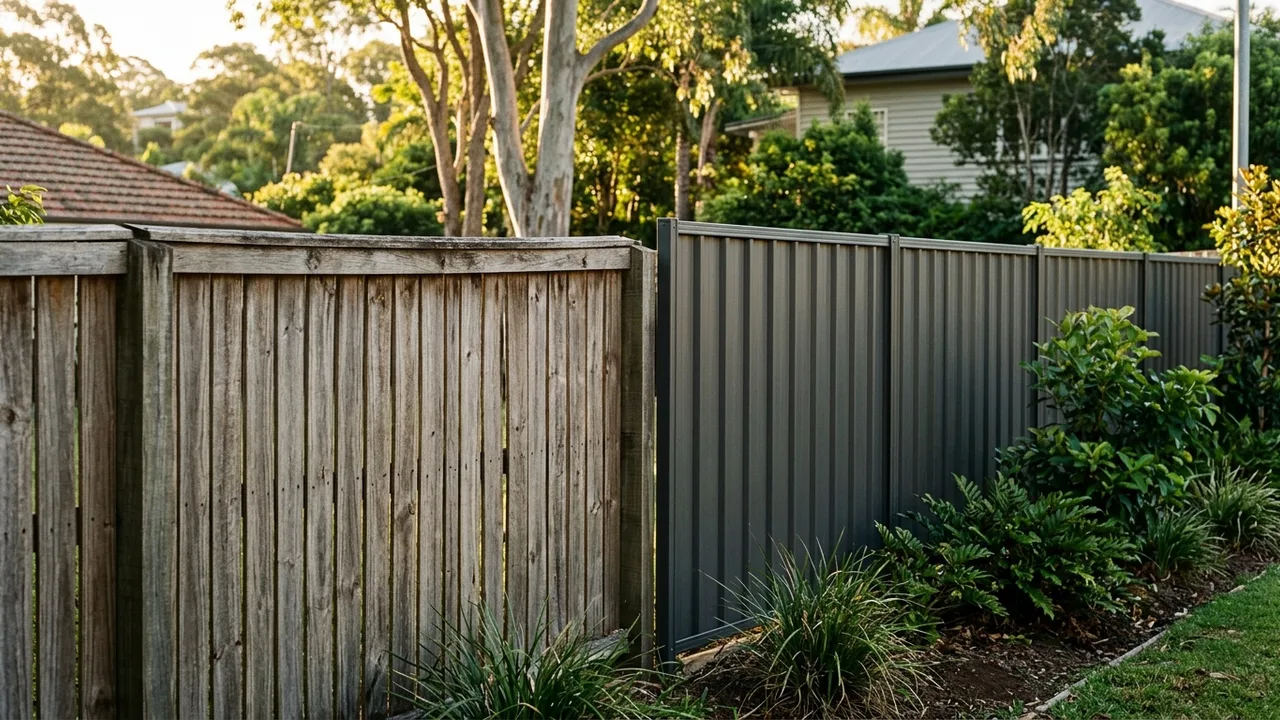
Blocks here tend to slope. The western suburbs sit on undulating terrain, and a flat block is more the exception than the rule. Many properties along the Brisbane River corridor, particularly in St Lucia, Chelmer, and Yeronga, have significant grade changes from the street to the rear boundary. That matters because steep slopes change the cost and complexity of any fence installation.
The soil is typically a reactive clay, which expands when wet and contracts in dry spells. Brisbane's subtropical climate, with its concentrated summer rainfall and dry winters, means that soil movement here is more pronounced than in many other Australian cities. Timber posts set in reactive clay can shift, heave, or lean over time if they're not installed correctly. Steel posts in Colorbond systems typically handle that movement more predictably.
The character of the area is also relevant. Much of Indooroopilly, Graceville, Sherwood, and Corinda is made up of pre-war and mid-century homes on generous, leafy blocks. A sleek Colorbond fence can look out of place in front of a 1920s Queenslander. In those situations, timber often reads as the more sympathetic choice.
Timber Fencing: Strengths and Real Limitations
Timber fencing has been the default in Brisbane's western suburbs for generations, and there are good reasons it's still popular.
What works well:
- It suits the aesthetic of older character homes and Queenslander-style blocks.
- It's easier to customise, with options for pickets, lapped boards, or framed panels in various heights.
- Good hardwood fencing, properly installed and maintained, has a warmth that steel simply doesn't replicate.
- For sloped blocks, a stepped or raked timber fence is often more visually forgiving than a Colorbond equivalent.
Where it gets difficult:
Timber in Brisbane's climate faces ongoing challenges. The subtropical humidity, combined with seasonal heavy rain, accelerates rot in untreated or low-grade timber. Merbau and treated pine are common choices here. Merbau is a dense hardwood that holds up well but will leach a reddish tannin onto paths and driveways when it's new and again after heavy rain. Treated pine is cheaper upfront but needs regular oiling or staining to maintain its condition, typically every two to three years.
Termite pressure is real in this part of Brisbane. Hardwood posts are more resistant than pine, but no timber is immune. If your block has any history of termite activity, that's worth factoring into your material choice.
Maintenance costs add up. A $4,000 timber fence that's neglected for five years can look considerably worse than a $5,500 Colorbond fence that's been hosed down twice. Over a ten to fifteen year horizon, the total cost of ownership often narrows between the two, once you account for oiling, repair, and eventual replacement of individual palings or posts.
Colorbond Fencing: Where It Earns Its Reputation
Colorbond, which is a painted steel panel fencing system made by BlueScope, has become the dominant residential fencing product across Queensland for good reasons.
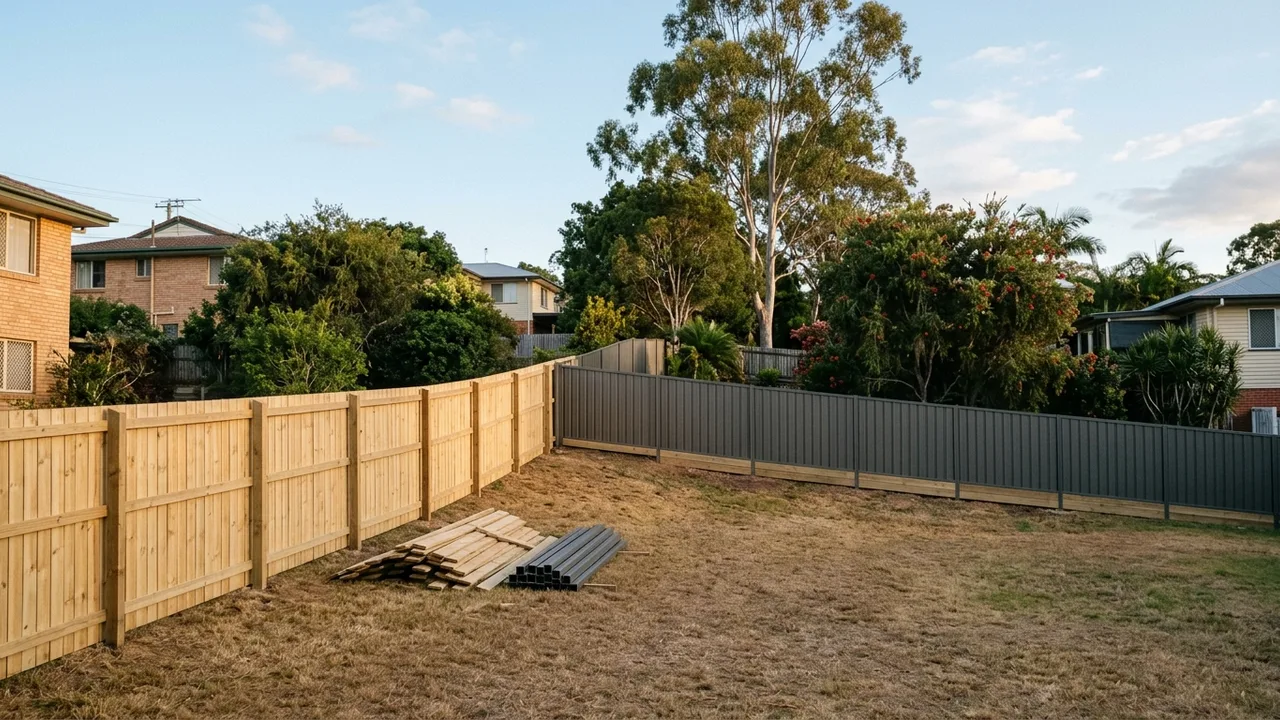
Why it performs here:
- Minimal maintenance. A rinse with a hose a couple of times a year is typically all it needs.
- Consistent performance in reactive clay soils, because the steel post and rail system is less susceptible to the heaving that affects timber posts over time.
- It's available in a range of colours that can complement both modern and heritage homes. Shades like Paperbark, Woodland Grey, and Manor Red are popular in the inner west for their ability to sit quietly against established gardens.
- Colorbond handles Brisbane's UV exposure well. The factory-applied finish is rated to resist fading and chalking in Australian conditions.
Where it falls short:
Colorbond is harder to repair discretely. If a panel is damaged, say, by storm debris or a vehicle, replacing a single section can be more visible than patching a timber fence. The colour match on a replacement panel may differ slightly from a fence installed several years earlier.
It also carries a higher upfront cost than pine, though it's broadly comparable to quality hardwood. For a typical 30 to 40 metre boundary fence on a western suburbs block, you might be looking at roughly $3,500 to $8,000 installed, depending on height, slope, and gate requirements. Timber in the same run could come in anywhere from $2,500 to $7,000, again depending heavily on the species and the site.
On sloped blocks, Colorbond requires either stepped or raked panels. Stepped panels leave a gap at the base, which is a consideration if you have pets or children. Raked Colorbond is available but adds to the cost.
Sloped Blocks: The Deciding Factor Nobody Warns You About
This is worth its own section because it's the most common source of unexpected costs in the western suburbs.
If your block drops more than about 300 to 400 millimetres across a fence run, you'll need to plan for how that grade change is handled. With timber, a skilled installer can cut and fix palings to follow the slope continuously, which gives a clean, gap-free result. With Colorbond, the panels are either stepped (creating triangular gaps at the base) or custom-raked, which costs more to fabricate.
Some blocks in Taringa, Sherwood, and Fairfield also have retaining requirements where the fence line sits at a level change between two properties. In those situations, the fence often needs to sit on top of a retaining wall rather than directly in the ground. That's a separate cost and a separate set of considerations, but it's worth knowing that both timber and Colorbond can be used in combination with a retaining structure.
Council Rules and Boundary Fencing in Brisbane
Brisbane City Council's standard fence height for a side or rear boundary is typically 1.8 metres, with some variation for corner blocks, front fences, and pool areas. Before you do anything, it's worth checking the Brisbane City Plan if your site has any overlapping character or heritage designations, which are common across Chelmer, Graceville, and parts of Indooroopilly.
Boundary fencing between neighbours is governed by Queensland's Neighbourhood Disputes (Dividing Fences and Trees) Act 2011. As a rule of thumb, both neighbours share the cost of a standard fence equally. If one party wants a more expensive option, they typically cover the difference. Getting that agreement in writing before work starts avoids problems later.
A Practical Recommendation
If your home is a post-war character house or Queenslander on a leafy block, and the fence is visible from the street, timber is worth serious consideration. Merbau hardwood in particular ages well in this climate and suits the neighbourhood character in suburbs like Chelmer, Graceville, and parts of Indooroopilly.
If your block has significant slope, if you have pets, or if low maintenance is genuinely important to you over a ten to fifteen year horizon, Colorbond is the more dependable choice. It's not the more beautiful choice in every context, but it's the more forgiving one.
A lot of blocks in this part of Brisbane end up with a mixed approach: Colorbond on the back and side boundaries for practicality, and timber (or aluminium) on the front or street-facing boundary for appearance. That's not a compromise, it's often just the sensible answer.
Whatever you decide, get a quote from someone who has actually worked on blocks in this area. Sloped reactive-clay sites in the inner west behave differently from flat Sandy blocks elsewhere in Brisbane, and the installation detail matters as much as the material.
If you'd like to talk through your specific block with a local fencing installer, we can connect you with someone who works regularly in the Indooroopilly area.
Quick answers