Fencing guide
Termites destroy Brisbane fences. Which materials actually resist them?
Termites destroy Brisbane fences. Which materials actually resist them?
Some materials resist termites completely; others slow them down; and a few offer no resistance at all. The short answer is that Colorbond steel and aluminium fencing are effectively termite-proof, while timber fencing ranges from highly vulnerable (untreated pine) to genuinely resistant (hardwood species like merbau or spotted gum), depending on species and treatment.
If you are in Indooroopilly, Sherwood, Chelmer or anywhere else in Brisbane's Inner West, this matters more than most suburbs. The area sits close to the Brisbane River, the soil stays moist for longer after rain, and there is an enormous amount of mature tree cover. Those conditions are close to ideal for subterranean termite colonies, particularly Coptotermes acinaciformis, which is responsible for the majority of structural timber damage in south-east Queensland.
Why termites target fences in the first place
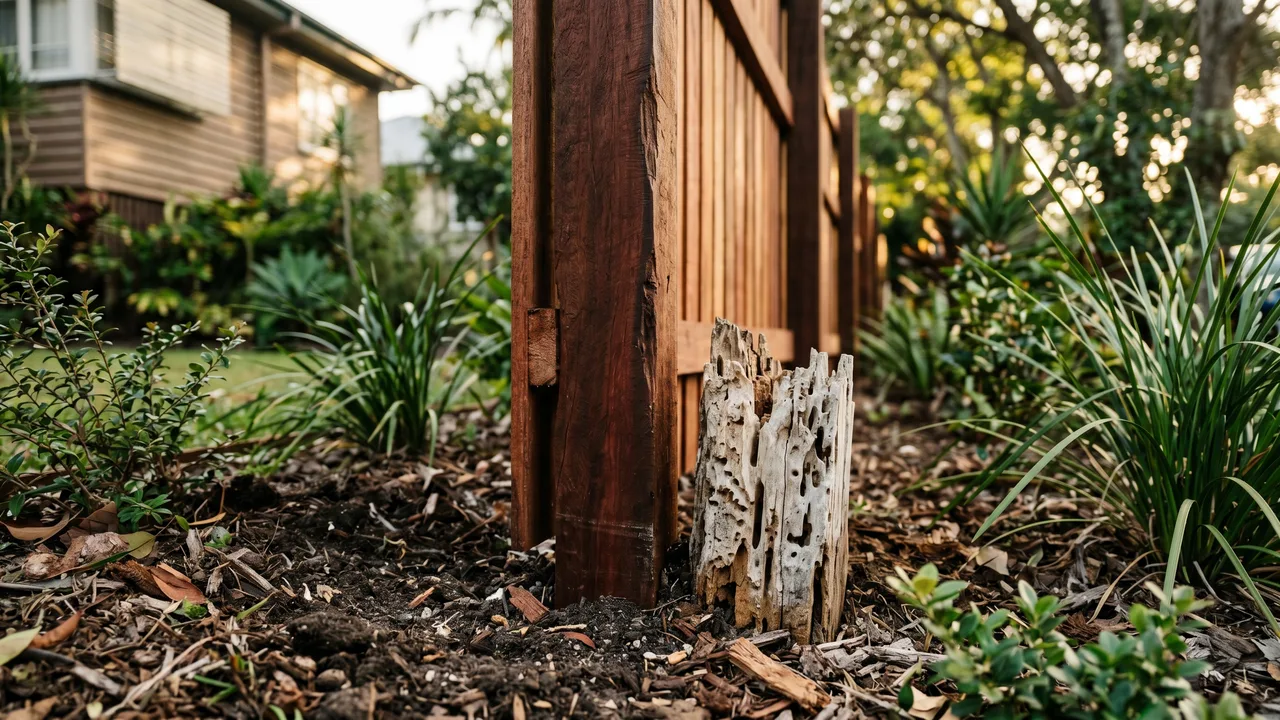
Termites are after cellulose, the organic compound that makes up the cell walls of wood. A fence post sunk into Brisbane clay gives them exactly what they want: moist soil contact, a direct timber food source, and usually very little disturbance. Fence posts are often the first point of entry into a property.
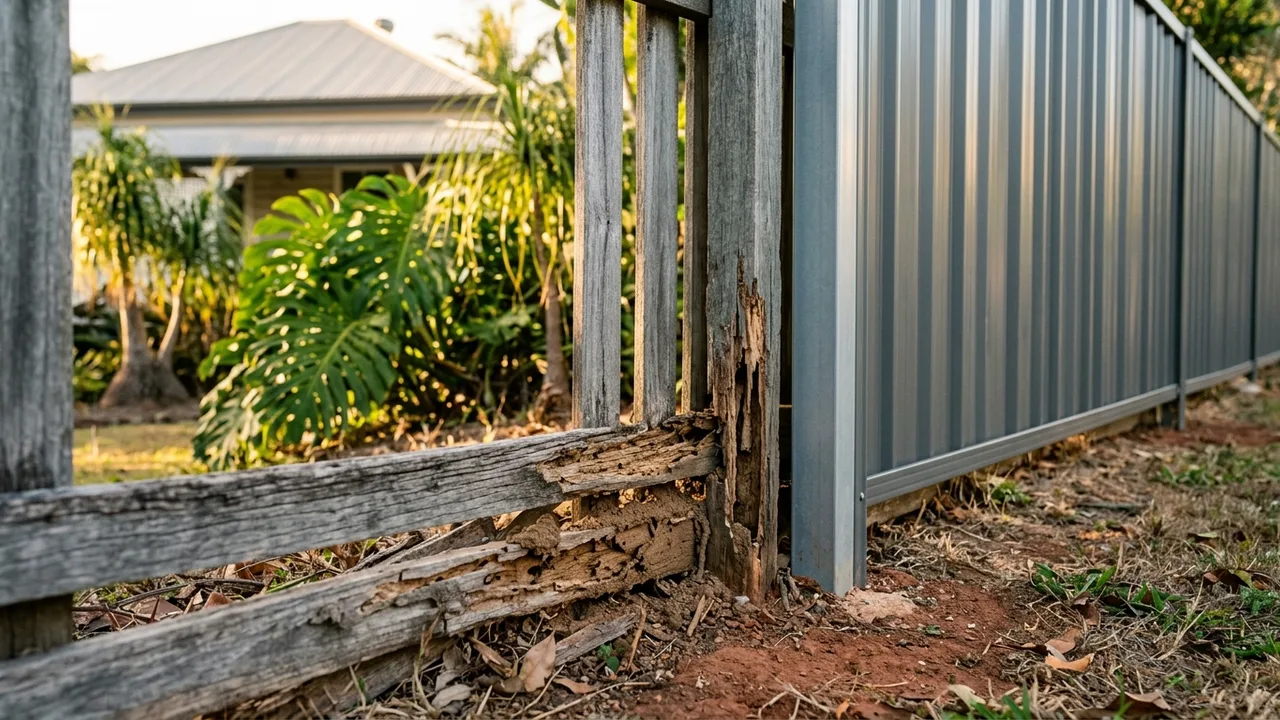
Subterranean termites build their colonies underground and travel up through the soil. A timber post touching the ground is essentially a welcome mat. They can work inside a post for months before any surface damage is visible. By the time a fence looks rotten or starts leaning, the damage is typically well advanced.
Bayside suburbs like Wynnum deal with a different kind of corrosion problem with metal fences, but in the Inner West the dominant threat to fences is biological, not chemical. Salt-air corrosion is less of a concern in Indooroopilly or St Lucia than it is within a kilometre or two of Moreton Bay.
Materials that give termites nothing to eat
Colorbond steel is the clearest choice if termite immunity is your priority. Steel contains no cellulose, so termites simply pass by it. The panels themselves are inert. The one caveat is the posts and rails, which in a standard Colorbond installation are also steel, so the whole fence system is effectively off the menu.
Colorbond does have trade-offs. It can look more industrial than a timber fence, which matters on a character streetscape in Graceville or Chelmer where Queenslander-style homes with timber detailing are common. It also heats up significantly in the Brisbane sun, which is worth thinking about if the fence borders a play area. And on a steeply sloped block (common throughout Indooroopilly and Taringa), stepped Colorbond can leave gaps underneath that you may need to address separately.
Aluminium fencing is another fully termite-resistant option. Powder-coated aluminium is particularly popular for front yards and pool surrounds because it looks lighter and more open than steel. It does not rust, it holds its colour well in Queensland UV, and it will not rot. The trade-off is cost per metre and the fact that aluminium fencing typically offers less privacy than solid panel fencing.
Concrete and brick piers or bases are also termite-immune, and using them as the structural elements of an otherwise mixed fence can reduce risk significantly.
Timber fencing: the honest breakdown
Timber is not a single product. There is a very wide spectrum of termite resistance across species and treatments, and treating all timber fences as equivalent is a mistake.
Untreated radiata pine is at the vulnerable end. It is cheap, widely available, and termites will consume it efficiently. It should not be used for posts with ground contact in Brisbane without treatment.
H4 or H5 treated pine uses a preservative treatment (typically copper-based) that makes the timber significantly more resistant to termites and rot. H4 is rated for in-ground contact; H5 is rated for more aggressive in-ground conditions. For a treated pine fence in Brisbane, H4 is the minimum you should accept for posts. This treatment does not make the timber termite-proof, but it extends service life substantially.
Hardwoods offer natural resistance through density and natural oils. Species like merbau, spotted gum, ironbark and tallowwood contain compounds that termites find unpalatable. Merbau in particular is widely used in Queensland fencing and decking. The trade-off is cost (typically $50-$100 per lineal metre more than treated pine, as a rough guide), weight (which affects installation), and sustainability considerations around sourcing.
One practical note: even a naturally resistant hardwood can be compromised if it sits in constant soil contact with poor drainage. The post base is where failure almost always begins. Using a metal post shoe that keeps the timber off the soil, or a concrete collar that seals the post base, extends the life of any timber fence considerably.
Ongoing protection and inspection
No fence exists in a vacuum. Even a metal fence can act as a superhighway for termites travelling from a neighbouring property to your home if it abuts garden beds or timber retaining walls. A fence inspection should always be part of your annual or biannual termite inspection, not treated separately.
For timber fences, checking for mud tubes (the pencil-width tunnels termites build over hard surfaces to travel above ground) is something you can do yourself. Run your hand along the bottom rail and posts in winter and spring when colonies are most active. Tap posts with a screwdriver handle; a hollow sound is a warning sign worth acting on.
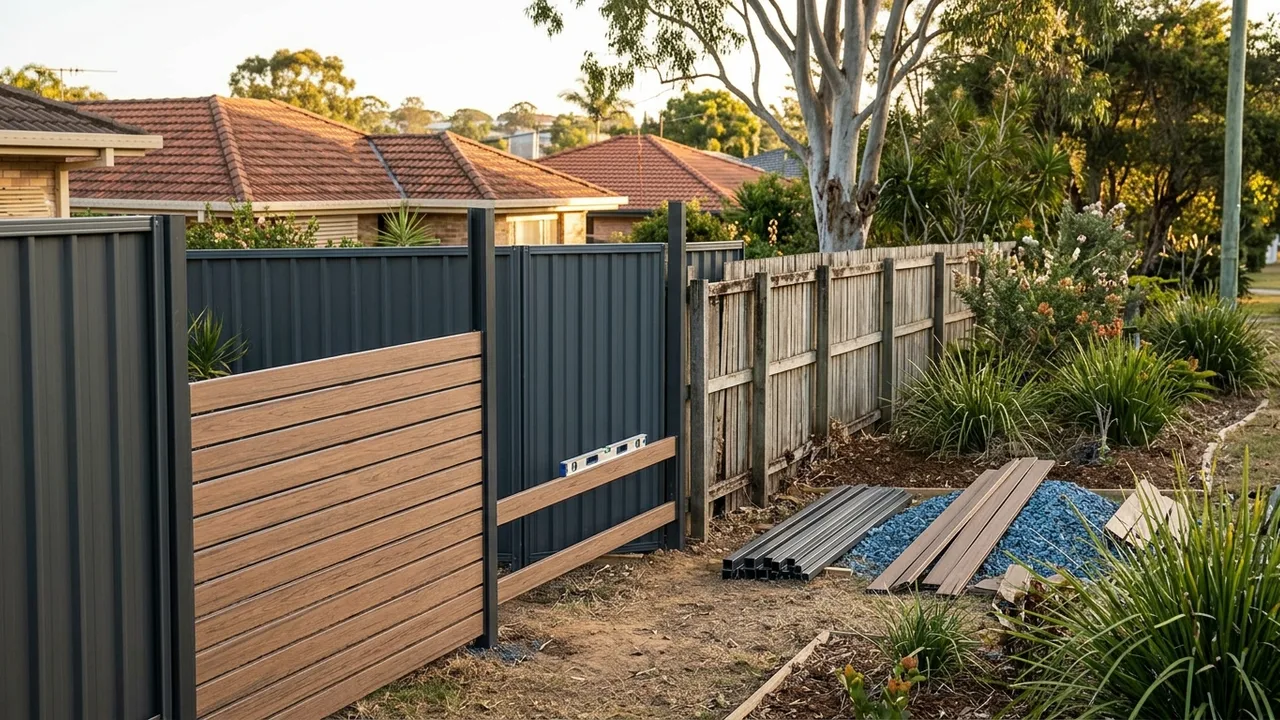
Some homeowners in the Inner West opt for a mixed approach: Colorbond or aluminium for the back-of-block boundary where maintenance is hardest, and a treated or hardwood timber fence for the street frontage where aesthetics matter more. That is a reasonable trade-off if the budget does not stretch to premium material throughout.
Cost and what to realistically expect
For a standard residential fence in Brisbane, typical installed costs (as a rough guide based on common job sizes) run approximately:
- Treated pine (H4 posts, pine rails and palings): $180-$280 per lineal metre installed
- Hardwood timber: $250-$400 per lineal metre installed, depending on species and detailing
- Colorbond steel: $180-$300 per lineal metre installed, depending on height and profile
- Aluminium: $200-$350 per lineal metre for standard infill panels
These figures are approximate and will vary with site difficulty, slope, access and current material prices. A full boundary replacement for a typical 600-800 square metre Inner West block might land anywhere between $4,000 and $12,000 depending on material and scope.
The cheapest fence is rarely the cheapest over ten years. An untreated pine fence that needs replacing in seven years costs more in total than a hardwood or steel fence that lasts twenty.
Choosing the right material for your block
The honest recommendation is this: if termite resistance is your primary concern, steel or aluminium removes the problem entirely. If you want timber (for aesthetics, for a Queenslander streetscape, or because you prefer it), use H4 treated pine as a minimum for posts, and consider hardwood species for anything in direct ground contact or for a fence you want to last.
Do not assume that a new timber fence has been built with appropriate treatment. Ask specifically before installation, and ask to see the species or treatment rating. A reputable fencer will have no problem answering that question.
If you are unsure what is right for your block in Indooroopilly, Taringa, Yeronga or nearby, a quick conversation with a local fencing contractor who knows Brisbane soil conditions and council requirements (including the Brisbane City Council's boundary fence rules) is worth more than any online guide. That includes this one.
If you want to connect with a fencer who works across these suburbs and can give you a straight answer, that is exactly what this service is here for. No pressure, just a referral to someone local.
Quick answers