Fencing guide
Does your fence need council approval in Indooroopilly or Chelmer?
Does Your Fence Need Council Approval in Indooroopilly or Chelmer?
For most standard fences in Indooroopilly, Chelmer and the surrounding Inner West suburbs, you do not need council approval. But "most" is doing a lot of work in that sentence. The height of your fence, where it sits on your block, whether you're in a flood overlay, and the heritage status of your property can all change that answer quickly.
Here's what you actually need to know before you order materials or call a fencing contractor.
What Brisbane City Council's Rules Actually Say
Brisbane City Council (BCC) manages development approvals under the Brisbane City Plan 2014. For fencing, the relevant code is the Fences and Retaining Walls Code, and it sets out what's called "accepted development" — work you can do without a formal development application (DA).
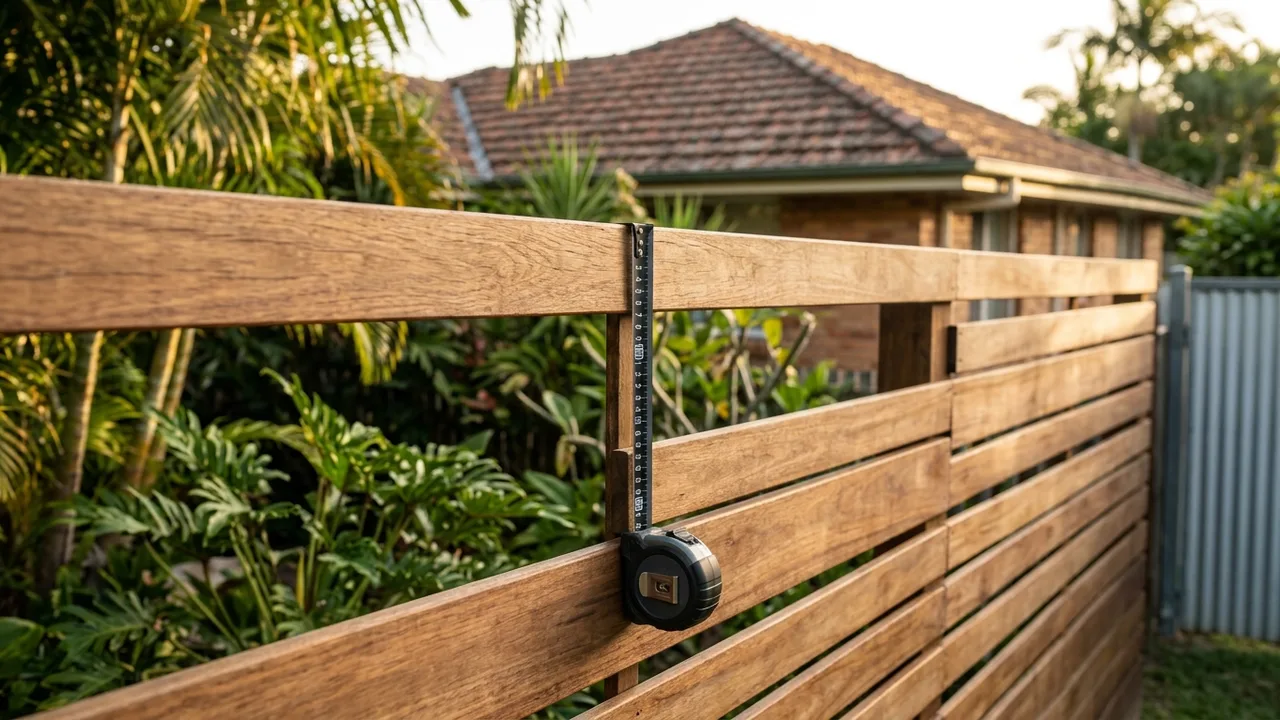
As a rule of thumb, a fence is accepted development (no approval needed) if it meets all of these:
- Side and rear boundary fences: no taller than 2 metres
- Front boundary fences (facing the street): no taller than 1.2 metres for a solid fence, or up to 1.8 metres if at least 50% of the fence is open (e.g. timber pickets spaced apart, pool-style aluminium)
- Not in a heritage, flood, or other overlay zone that adds extra conditions
- Not on a corner lot where secondary street frontages apply
If your fence ticks all those boxes, you can build without a DA. If it doesn't, you'll need either a DA or to redesign the fence so it does comply.
One thing worth knowing: "accepted development" still has to meet the technical standards. A 2-metre Colorbond fence at the side boundary is fine without approval, but it still needs to be structurally sound, sit on your land (not your neighbour's), and not obstruct sightlines in a way that creates a safety issue.
The Inner West Specifics: Heritage, Overlays and Sloped Blocks
Indooroopilly, Chelmer, Graceville and Sherwood have a higher-than-average concentration of pre-war and interwar homes, many of them Queenslanders. Some of these properties sit within BCC's Traditional Building Character (TBC) overlay or are listed individually on the Local Heritage Register.
If your property is in the TBC overlay, that doesn't automatically mean you can't put up a new fence, but it does mean the fence should be consistent with the character of the area. BCC's guidance for TBC properties typically points toward timber picket fences or low masonry walls at the front, rather than solid Colorbond at street level. If you're unsure whether your property is in an overlay, BCC's online mapping tool (PD Online) shows overlays by address, and it's worth checking before you commit to a design.
Flood overlays are another consideration. Parts of Chelmer, Graceville, Corinda and Sherwood sit within the Brisbane River flood corridor. Fencing in flood-affected areas sometimes needs to meet additional requirements around flow paths and debris retention. A solid fence on a flood-affected boundary can create issues not just for approval, but for your home's flood resilience.
Sloped blocks add a third layer of complexity. Much of the Inner West sits on gentle to moderate slopes, and a fence that follows the fall of the land may require a retaining component. A combined retaining wall and fence solution is common in suburbs like Taringa, St Lucia and Indooroopilly proper. Retaining walls over 1 metre often have their own approval requirements, separate from the fence itself.
Corner Blocks and Secondary Street Frontages
Corner blocks come up often in the Chelmer-Graceville-Sherwood pocket, where the original subdivision created quite a few of them. If your block has two street frontages, both are treated as "front" boundaries for fencing purposes.
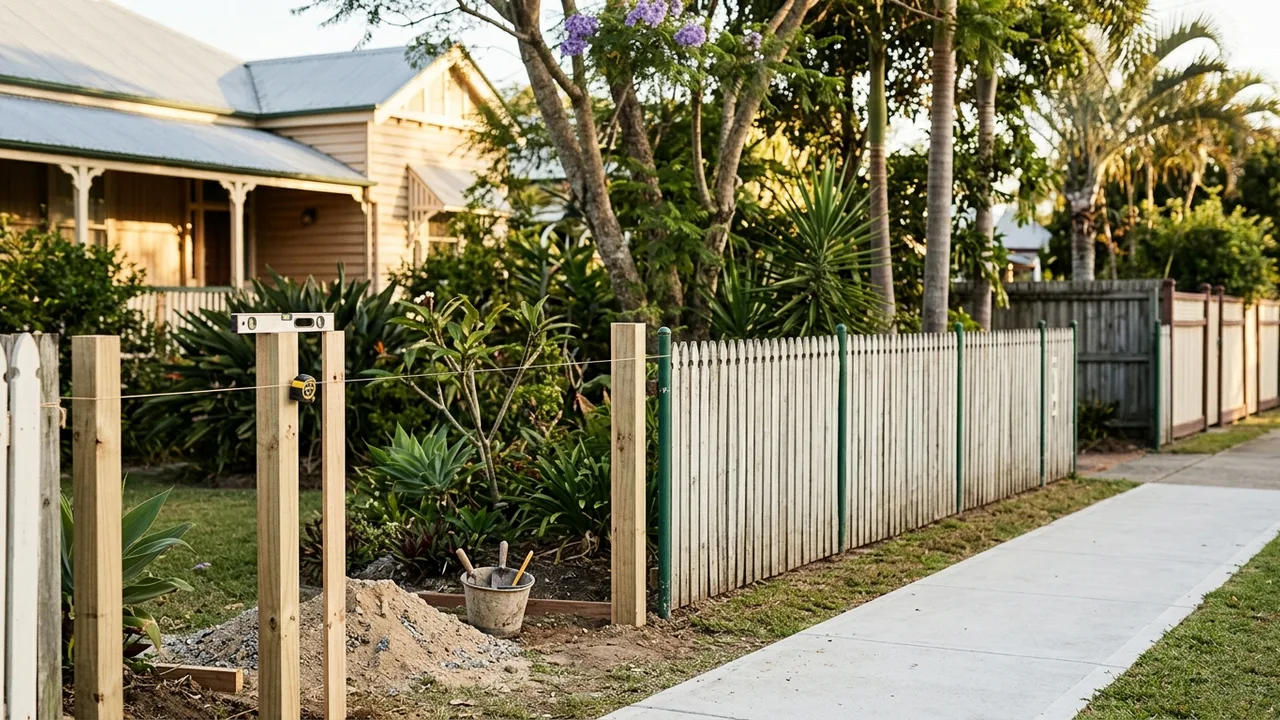
That means the 1.2-metre solid fence rule (or 1.8-metre open fence rule) applies along both street-facing sides, not just the one you think of as your front. This catches a lot of homeowners off guard. If you want a taller, more private fence along what feels like a side fence but technically faces a road, you'll need either a DA or a redesign.
It's worth measuring from the kerb carefully and checking the title of your property. Sometimes what looks like a footpath is technically a road reserve, and your fence setback and height limits can depend on the boundary, not the physical kerb line.
Pool Fencing: A Separate (and Stricter) Set of Rules
If you have or are planning to install a swimming pool, spa or wading pool, the fence rules are entirely different. Pool fencing in Queensland is governed by the Building Act 1975 and the Building Code of Australia, not just BCC's local planning code.
The key requirements include:
- A minimum barrier height of 1.2 metres (measured from the outside of the pool area)
- No footholds or climbable elements within 90 centimetres of the fence on the outside
- Self-closing, self-latching gates that open away from the pool
- No direct access from the house into the pool enclosure through a door (unless it has an approved door alarm system)
Pool fencing must be certified by a licensed building certifier after installation. This isn't optional. If you sell your home, the certification is part of what you'll need to disclose. Using a contractor who can organise the certification as part of the job saves you a separate step.
Glass and aluminium pool fencing are both common choices in the Inner West, partly because they don't visually dominate smaller backyards, and partly because they're low-maintenance in Brisbane's humid climate.
Do You Need to Notify Your Neighbour?
Yes, in most cases. Under Queensland's Neighbourhood Disputes (Dividing Fences and Trees) Act 2011, a dividing fence (any fence on or near a common boundary) requires you to give your neighbour a written fencing notice before work starts, unless you already have their agreement.
The notice needs to include the proposed fence line, the type of fence, the estimated cost, and a proposed contribution from your neighbour. As a rule of thumb, neighbours typically share the cost of a standard dividing fence equally, though this can vary depending on what fence exists already and what each party wants.
If you're building entirely on your own property (set back from the boundary), you don't technically need to notify your neighbour, but it's still good practice and can prevent disputes later.
You don't need council approval for the fencing notice process — it's a separate, private arrangement between neighbours. But it does take time, and if your neighbour disputes the notice, resolution can take weeks. Factor this into your timeline before you book a contractor.
Making a Practical Decision: When to Just Apply
Some homeowners avoid applying for a DA because they assume it's expensive and slow. In many cases, a straightforward DA for a fence is a relatively minor process and the BCC fee is typically a few hundred dollars depending on the application type. It's not free, and it does take time (often 20 to 40 business days for a code-assessable application), but it's not the ordeal people imagine.
The trade-off is this: building without approval when approval was actually required can mean an enforcement notice, the cost of removing or modifying the fence, and a dispute that affects your property's resale. That's a far worse outcome than a few weeks' wait and a modest application fee.
If you're close to a height limit, on a heritage-listed property, on a corner block, or unsure whether a flood overlay applies, spending an hour with a private certifier or town planner before you commit to a design is money well spent.
A Practical Starting Point
Check your property's overlays on BCC's PD Online map. Measure the fence heights you're considering against the thresholds above. Have a direct conversation with any fencing contractor you're talking to about whether your planned fence sits within accepted development criteria.
Most fencing work in Indooroopilly and Chelmer doesn't need a DA. But the consequences of getting it wrong aren't worth the time you'd save by skipping the check. A fifteen-minute look at the planning map and a straightforward conversation with someone who installs fences in this area regularly can answer your specific situation far better than a general rule ever will.
Quick answers