Fencing guide
How long should a fence last in Brisbane before you need to replace it?
How Long Should a Fence Last in Brisbane Before You Need to Replace It?
A well-built fence in Brisbane should last anywhere from 10 to 50 years, depending almost entirely on what it's made from and how it's maintained. Colorbond steel and aluminium sit at the longer end of that range; untreated pine sits at the shorter end. The honest answer is that material choice matters far more than anything else.
That said, Brisbane's climate adds complications that other cities don't face to the same degree. High humidity, subtropical storms, termite pressure, and UV intensity all accelerate wear. If you're in the Inner West suburbs, like Indooroopilly, Sherwood, or Chelmer, you can also add slope drainage, clay soil movement, and seasonal jacaranda debris to the list of things working against your fence.
What Each Fencing Material Realistically Delivers
Timber (hardwood): A hardwood fence built from species like merbau or spotted gum, properly treated and installed with correct post depth, can last 20 to 30 years. Some hardwood fences in Brisbane's western suburbs are still standing after 40 years. The caveat is ongoing maintenance. Without a fresh coat of oil or sealant every two to three years, the timber dries, checks, and loses structural integrity faster than you'd expect.
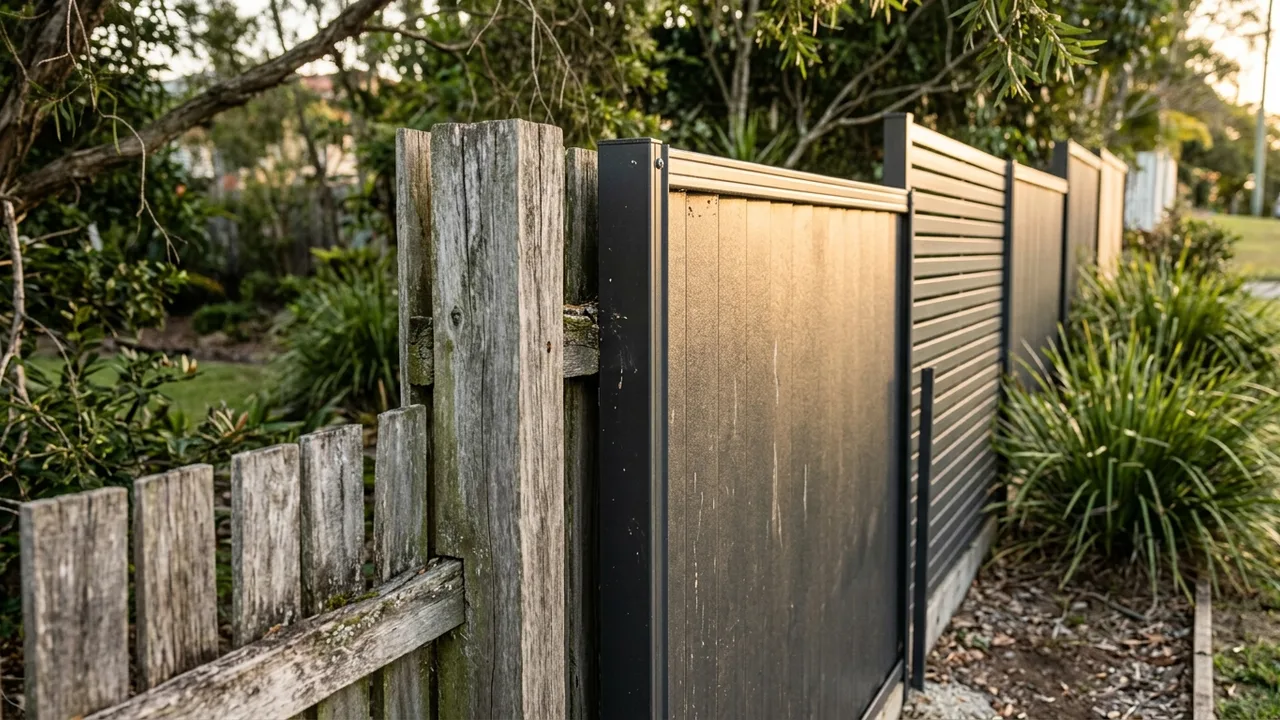
Timber (pine/treated pine): H4 or H5 treated pine is the most common budget option. Realistically, expect 10 to 15 years before posts start to rot at the base, especially in clay-heavy soils like those across Moorooka and Fairfield. Termite activity in Brisbane's southwest can shorten that window further if the treatment has degraded.
Colorbond steel: Colorbond is the dominant fencing material in Brisbane for good reason. A correctly installed Colorbond fence typically lasts 20 to 30 years with almost no maintenance beyond an occasional rinse down. The steel is zinc-coated and painted with a thermoset polyester finish that handles UV well. It won't rot, termites ignore it, and it survives most storm events without damage if posts are set properly.
Aluminium: Powder-coated aluminium fencing, particularly the kind used for front yard and driveway applications, is extremely long-lived. 30 to 50 years is realistic because aluminium doesn't rust, the powder coat holds in Brisbane's climate, and there are no organic materials for insects to attack. Pool fencing and decorative aluminium slat fencing both fall into this category.
Glass pool fencing: The glass panels themselves rarely fail. What eventually needs attention are the fittings, spigots, and posts, typically after 15 to 25 years. Brisbane's UV intensity can degrade the seals and rubber components faster than the glass itself.
How Brisbane's Climate Specifically Wears Fences Down
Most fencing data comes from temperate climates. Brisbane behaves differently in a few important ways.
UV exposure here is intense year-round. Timber dries and greys faster than it would in Melbourne or Sydney. Colorbond's coating holds well, but cheaper steel products without proper treatment can chalk and corrode within five to ten years.
Summer storm season runs roughly November through March. The Inner West, including St Lucia, Taringa, and Graceville, sits in a corridor that regularly sees severe thunderstorm activity. High winds are the primary cause of acute fence failure. A fence that's been quietly losing post integrity for years will often come down in a single storm.
Soil movement is a real factor across much of Brisbane's Inner West. Clay-heavy soils expand when wet and contract in dry spells. Over years, this cycle gradually tilts posts and loosens concrete footings. You'll often see this as a slight lean in older fences, which, left unaddressed, accelerates failure.
Termites are active across most of Brisbane. Treated pine does provide some protection, but H4 treatment is not a lifetime guarantee. Posts in direct ground contact are the most vulnerable point. If your timber fence was built more than 15 years ago, it's worth tapping the base of a few posts with a screwdriver handle. A hollow sound is a clear warning sign.
Signs Your Fence Is Reaching the End of Its Life
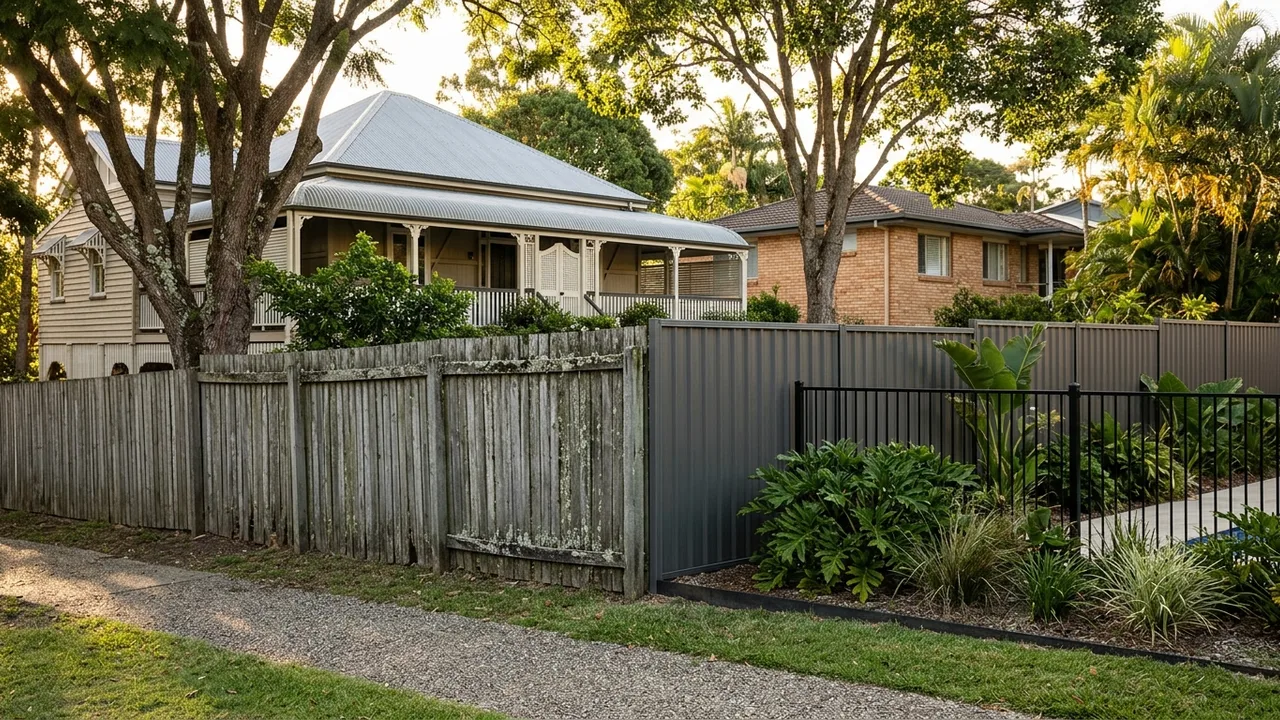
There's a difference between a fence that needs repair and one that's due for replacement. A single broken rail or a damaged panel is usually worth fixing. But certain signs suggest the fence is past the point where repair is economical.
- Posts leaning more than a few degrees, particularly at multiple points along a run
- Widespread rot at or below ground level in timber posts
- Rust through the panel face (not just surface discolouration) in steel products
- More than two or three rails cracked or split in a short stretch
- A fence that has visibly moved off its original line due to soil movement
When repairs start approaching 40 to 50 percent of the cost of a replacement, most trades will recommend replacement. That's a reasonable threshold. A repaired fence with compromised posts will likely need attention again within a few years.
Repair vs Replace: The Cost Trade-Off
This is where homeowners often feel uncertain, so it's worth being direct.
A partial repair on a Colorbond fence, replacing a few damaged panels and resetting a leaning post, might run $300 to $800 depending on access and the number of panels involved. For a fence that's otherwise in good condition and under 15 years old, that's usually sensible.
A full replacement of a standard suburban fence run (say, 30 to 40 metres of Colorbond with a gate) typically falls in the $2,500 to $6,000 range for most Inner West Brisbane properties, depending on slope, access, and specification. Timber hardwood at that length can run higher. Aluminium slat fencing, because of material costs, tends to sit at the upper end of any quote.
The hidden cost in delaying replacement is the compounding damage. A leaning fence pushes strain onto adjacent sections. A rotting post that falls in a storm can damage a vehicle, injure someone, or breach a pool barrier, which becomes a safety and legal issue quickly.
The honest trade-off: If your fence is under 12 to 15 years old, repair usually makes sense. If it's older and showing multiple failure points, replacement is typically the better use of your money over a five-year horizon.
What Extends Fence Life in Brisbane Specifically
A few practical habits genuinely extend fence life in this climate.
For timber fences, keeping vegetation off the palings and rails matters more than people realise. Brisbane gardens grow fast. A passionfruit or bougainvillea allowed to climb a timber fence traps moisture and accelerates rot. Clearing leaf litter from the base of a fence also reduces moisture retention and termite habitat.
For Colorbond, the main maintenance task is a rinse with a garden hose once or twice a year to remove dust, pollen, and grime. Brisbane's jacaranda season in October and November leaves a fine layer of debris on every horizontal surface. It's not corrosive, but it holds moisture against the steel if it builds up.
For aluminium and glass, occasional cleaning with a mild detergent is usually enough. Check hinges and latches on pool gates every six months as part of your pool safety obligations under Queensland law.
Regardless of material, post installation quality is the single biggest determinant of longevity. Posts set too shallow or without adequate concrete footing will fail earlier than the panels or palings they support.
Making a Practical Decision
If your fence is showing age but you're not sure whether to repair or replace, the most useful first step is an honest inspection of the posts at ground level. That's where failure almost always starts.
A reliable local fencing contractor can usually give you a clear opinion on this fairly quickly. It's worth getting two or three quotes, not to find the cheapest price, but to see whether the assessments align. If two out of three trades say your posts are compromised, that's worth taking seriously.
Timing also matters in Brisbane. Scheduling a fence replacement before storm season, so before November, gives new concrete footings time to cure properly and avoids the surge pricing that follows major storm events.
There's no perfect answer on timing. A fence that's been standing for 25 years may have another decade in it. One that's been poorly maintained for 12 years may already be past its useful life. The material, the soil, the maintenance history, and a bit of luck all play a role.
If you'd like an honest local assessment for a property in Indooroopilly, Sherwood, Graceville, or the surrounding suburbs, we can connect you with a vetted local fencing contractor who knows the area. No obligation, just a straight conversation about what your fence actually needs.
Quick answers