Fencing guide
Front yard fencing changes how your home looks from the street. Get the choice right.
Your front fence shapes the whole street view of your home
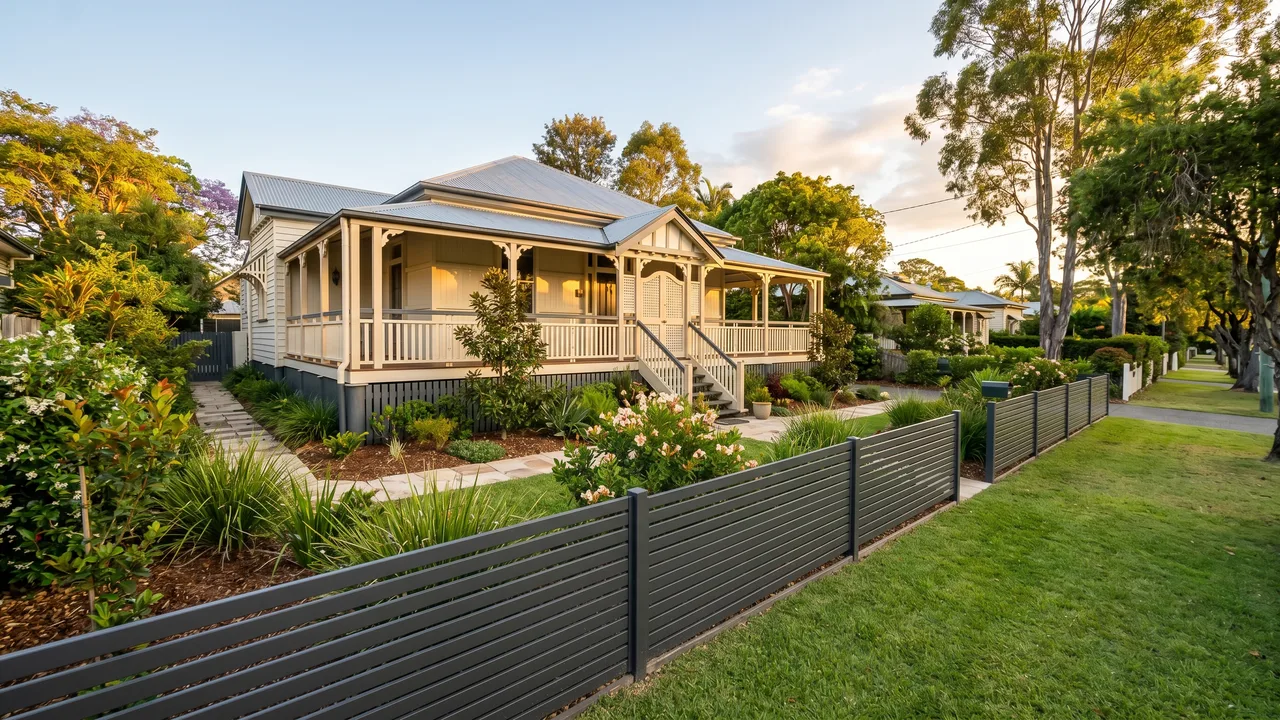
The front fence is the first thing anyone sees. Before the garden, before the paint colour, before the front door, the fence sets the tone. Get the style, height and material right and the house looks considered and well cared for. Get it wrong and even a freshly painted Queenslander can look a bit forlorn.
That is not hyperbole. It is just the reality of how streetscapes work. And in suburbs like Indooroopilly, Chelmer and St Lucia, where older timber homes sit alongside newer brick builds on blocks of varying size and slope, the front fence decision is genuinely complex. This article walks through the key choices so you can approach it with a clear head.
Height and openness: what you actually want from a front fence
Start with purpose, not materials. Most front fences in Brisbane's Inner West are not primarily about security. They define the boundary, frame the garden, give kids and dogs a safe space, and contribute to the street aesthetic. Full privacy is usually a back-yard concern.
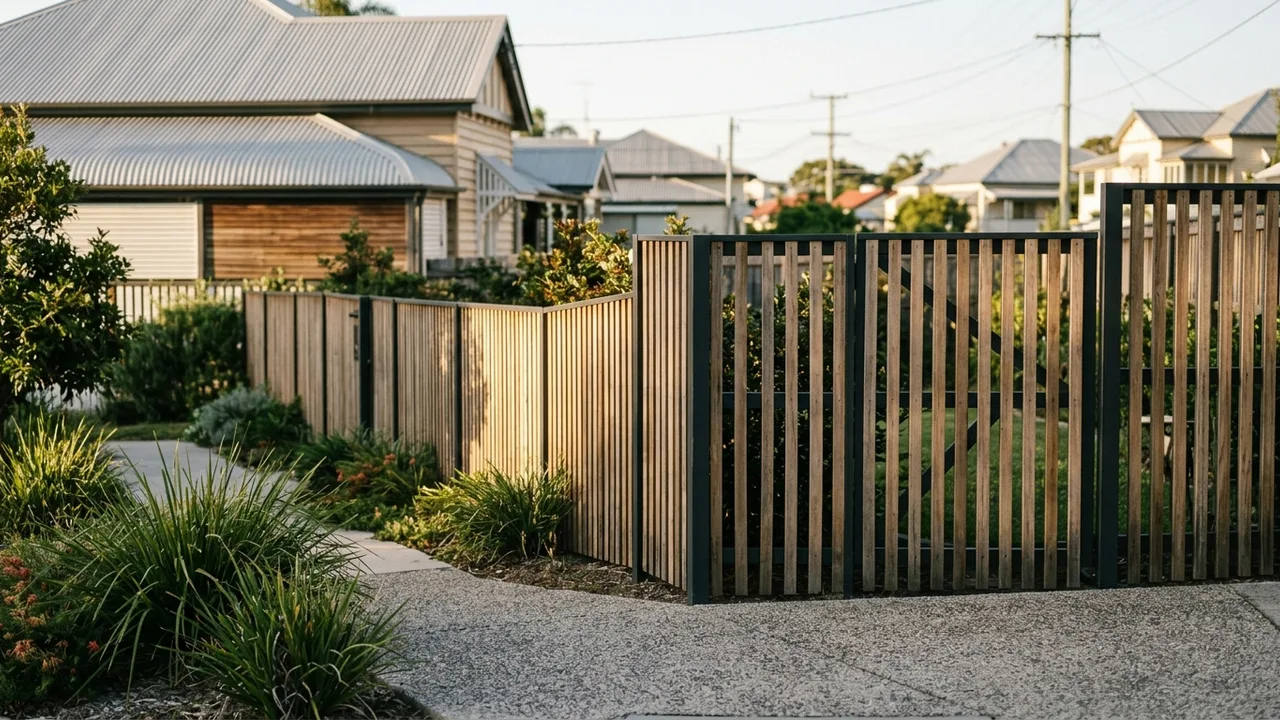
A low fence, say 900 mm to 1.2 m, keeps a friendly, open feel. It says "this is my property" without shutting the street out. A fence in the 1.5 m to 1.8 m range creates more separation, which can suit a busy road or a house set close to the footpath. Anything taller than 1.8 m at the front typically requires a development application (DA) in Brisbane City Council's jurisdiction, so check before you build.
The trade-off with height is simple: more height means more privacy but less visual connection to the street. On a block with a mature garden, a lower fence lets the plants do the work. On an exposed block with no established garden, a taller fence can look like a fortress until the greenery catches up.
Material choices and how they suit this part of Brisbane
Each material has a natural home. Knowing where they work best saves you from a decision you regret in three years.
Timber suits older homes almost instinctively. A hardwood paling or picket fence on a post-and-rail frame looks at ease in front of a Queenslander or a 1940s fibro cottage in Graceville or Sherwood. Hardwood species like spotted gum or blackbutt handle Queensland's humidity and heat well. Pine costs less upfront but needs regular oiling or painting and is more vulnerable to moisture at ground level. Timber fences typically run $180 to $280 per linear metre installed, though that range shifts with timber species and detailing.
Colorbond steel is practical and honest about what it is. It suits more contemporary homes and newer builds. It handles Brisbane's UV, humidity and occasional storm punishment better than most materials. The colour range is wide enough to complement most exterior palettes. It is not the best choice for the front of a traditional Queenslander, but on a sloped block in Moorooka or Taringa where a combined retaining and fence solution is needed, Colorbond makes real sense. It typically costs less to maintain than timber over a ten-year horizon.
Aluminium sits between the two in many respects. Powder-coated aluminium fencing can be fabricated into clean horizontal or vertical slat profiles that suit mid-century and contemporary homes well. It does not rust, does not need painting, and holds its colour in the subtropical sun. Front yard aluminium fencing is increasingly common in Yeronga and Fairfield where more contemporary renovations are happening on older blocks. The upfront cost tends to be higher than pine but comparable to hardwood.
Glass and frameless panels are generally kept to pool areas rather than street frontages, where the maintenance of fingerprints, pollen (Indooroopilly's jacaranda season is no joke) and dust can quickly make them look tired.
Sloped blocks and the fencing complications they create
A flat block is straightforward. A sloped block is not. Much of the Inner West sits on undulating ground, and front fences on a sloped allotment need to either step down in sections (a "stepped" fence) or be raked to follow the grade.
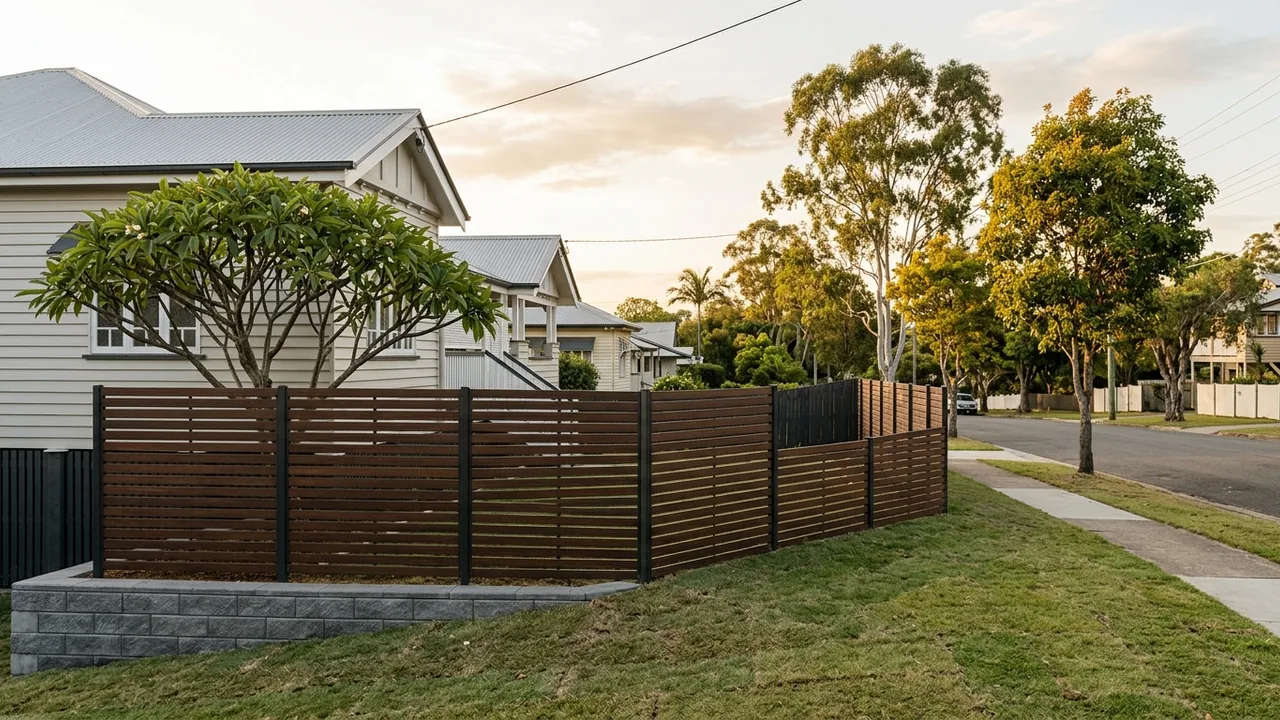
Stepped fencing creates clean, level panels that look sharp but leaves triangular gaps at the base where the fence steps down. On a quiet residential street that is often fine. Raked fencing follows the slope continuously for a cleaner sight line but is harder to achieve with panel-based systems like Colorbond unless the panels are custom cut.
Where retaining is also needed, a combined retaining wall and fence structure can resolve both problems at once. A masonry or concrete block retaining base with a fence on top is common in Chelmer, Corinda and parts of Indooroopilly where blocks drop toward the street. It is a more involved job, typically at the higher end of the $2,000 to $15,000 range for front fence work, but it handles the engineering problem and the aesthetic problem together.
Council rules, setbacks and covenants worth knowing about
Brisbane City Council sets out fencing requirements under its planning scheme. For front fences in most standard residential zones, the general rule of thumb is that fences up to 1.5 m high are accepted development (no DA needed) as long as they are not solid above 1.2 m in the primary street setback zone. Solid fences above those heights, or fences in character overlay areas, may need a DA or at minimum a pre-lodgement check.
Some older streets in Chelmer, Graceville and parts of St Lucia fall under character overlay areas, which place restrictions on materials and style to protect the streetscape character. If your home is in one of these areas, a heritage-style timber picket or paling fence is usually the safest path both aesthetically and from a planning perspective.
Separately, some properties, particularly units and townhouses, are subject to body corporate or community title rules. Check your title before committing to a design.
Practical budget guidance without the guesswork
Front fence costs in Brisbane vary quite a bit depending on length, height, material, slope, and whether any demolition of an existing fence is involved. As a rough guide for a typical 15 to 20 metre front boundary:
- Pine paling fence: $2,500 to $5,000 installed
- Hardwood paling or picket: $4,000 to $8,000 installed
- Colorbond steel: $3,000 to $6,500 installed
- Powder-coated aluminium slat: $5,000 to $10,000 installed
- Combined retaining and fence (concrete block base plus fence): $6,000 to $15,000 depending on height and length
These figures are estimates based on typical Brisbane Inner West jobs. Your quote will differ based on site-specific factors, and getting two or three written quotes is always worth the effort.
Removal of an old fence is typically an additional $500 to $1,500 depending on the material and length. Do not assume it is included unless the quote says so explicitly.
Making the final call
There is no universally correct front fence. The right choice depends on your home's era and style, the slope of your block, your street's character, and what you actually need the fence to do.
A few honest principles that tend to hold up:
- Match the fence era to the house era, broadly. A slat aluminium fence on a 1920 Queenslander often looks incongruous. A lacework timber picket usually does not.
- Spend a little more on materials at the front. The front fence is always on show. It is not the place to cut corners.
- Think about maintenance realistically. If you are not going to re-oil a timber fence every two years, choose a material that forgives neglect better.
- Get the height right for the use case. A fence that is too low to contain a dog or too high to feel welcoming is a fence you will wish you had thought about more carefully.
If you want a local fencer who knows the block types, the council overlays, and the materials that perform in Brisbane's climate, we can connect you with someone who works regularly in this area. No obligation, just a straightforward referral to a vetted local tradesperson.
Quick answers