Fencing guide
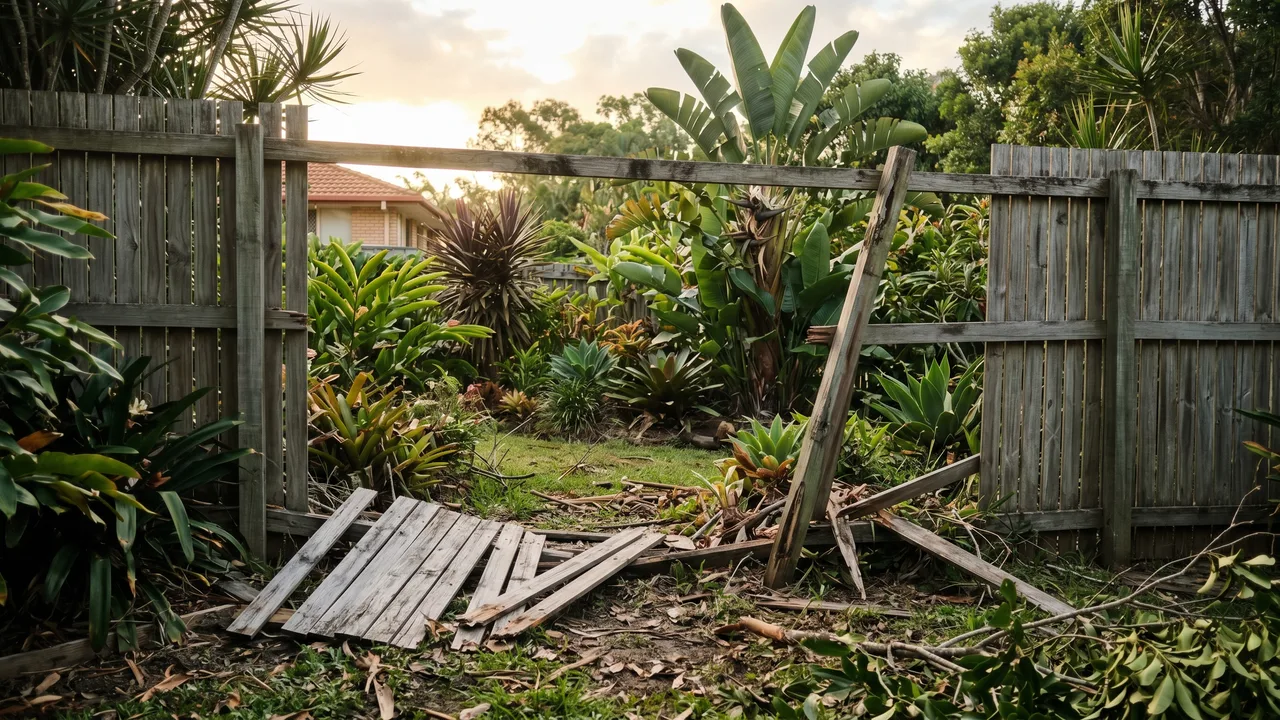
Storm season damages thousands of Brisbane fences. Is yours worth repairing or replacing?
Storm Season Damages Thousands of Brisbane Fences. Is Yours Worth Repairing or Replacing?
The honest answer is: it depends on what broke, how old the fence is, and what material you're dealing with. A snapped post on a five-year-old hardwood fence is almost always worth fixing. A row of rotten palings that a storm simply finished off probably isn't. Working that out before you call anyone saves you money and frustration.
Brisbane's storm season, which typically runs from November through to March, brings a combination of high winds, saturated ground and falling branches. In suburbs like Indooroopilly, Sherwood and Chelmer, large poinciana and fig trees are common culprits. The Inner West's older established gardens are beautiful, but they load fences hard when a squall rolls through. If your fence took a hit this past season, here is a straightforward way to think through your options.
What the Storm Actually Did (and Why It Matters)
Before you can decide repair or replace, you need to understand the failure. There are really three types of storm damage to a timber or steel fence.
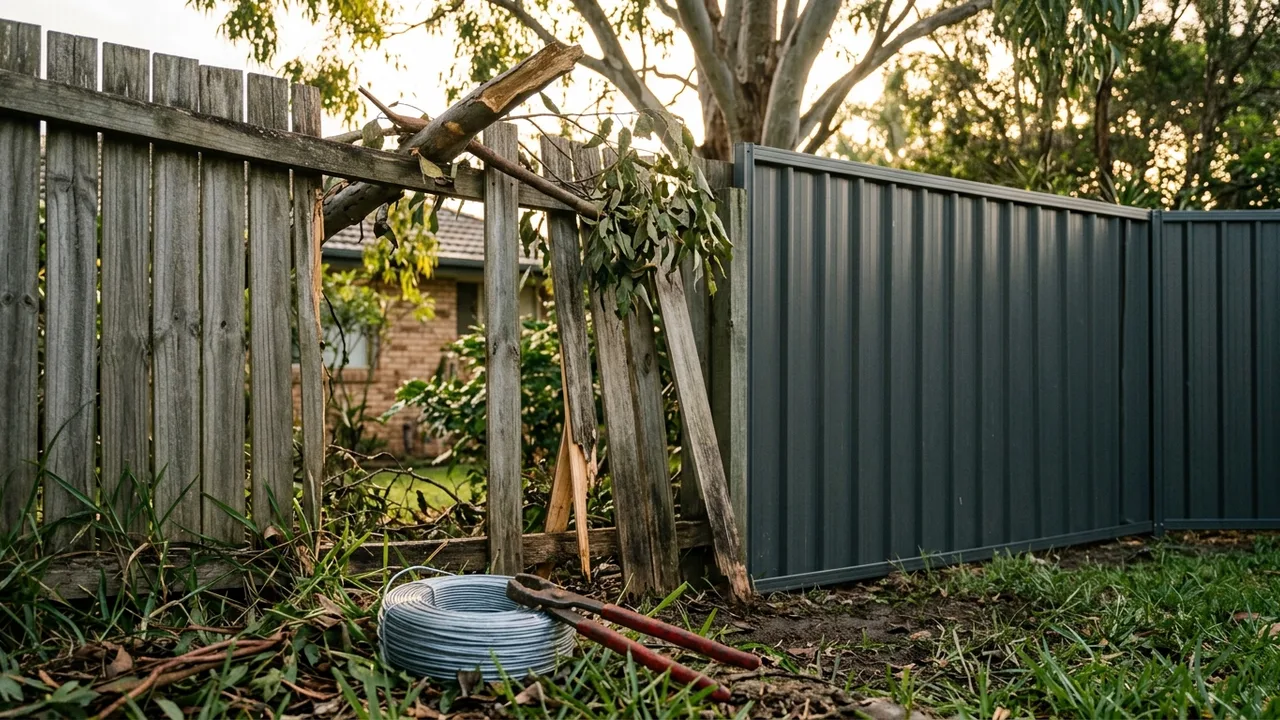
Structural failure is when posts snap at or below ground level, or when a whole panel of Colorbond lifts and warps. This is the most serious kind. The post is the skeleton of any fence, and if the skeleton is compromised, repairing the face of the fence without addressing it is wasted money.
Surface or panel damage covers broken or missing palings, a bent Colorbond sheet, or a section of aluminium that took a direct hit from a branch. The structure underneath is sound, but something needs to be replaced.
Accelerated pre-existing failure is arguably the most common situation. The storm did not destroy a healthy fence. It finished off one that was already on the way out, held together by paint and habit. Saturated soil causes post movement; years of Brisbane humidity had already started the rot. The wind just made it obvious.
Identifying which situation you're in shapes everything that follows.
Timber Fences: When Repair Makes Sense and When It Doesn't
Timber fencing is the dominant style across Indooroopilly, Taringa, St Lucia and most of Brisbane's Inner West. Hardwood species like spotted gum and merbau are genuinely durable, but they still have a finite life, and pine is shorter still.
As a rule of thumb, if a timber fence is under ten years old, has sound posts, and the damage is isolated to two or three panels, repair is likely the right call. A single post replacement and paling repair on a hardwood fence might cost somewhere in the range of $400 to $900, depending on access and whether a retaining function is involved. That is well short of replacement.
If the fence is fifteen or more years old and you are pulling at palings to find soft timber underneath, the repair economics shift. You might spend $600 fixing storm damage only to spend another $600 six months later when the next section goes. Sometimes the smarter move is to repair the urgent section properly now, then plan a staged replacement over twelve to eighteen months as budget allows. That is an honest trade-off, not a sales pitch.
One detail that catches Inner West homeowners out: many Queenslander-era properties in Chelmer, Graceville and Corinda have fences built on top of low masonry walls, or combined retaining walls. If storm damage has shifted the structure and not just the fence, you are looking at a more involved job that combines retaining and boundary fencing work. It costs more, but patching the fence without addressing the retaining component is a temporary fix at best.
Colorbond and Aluminium Fences: A Different Calculation
Steel and aluminium fences behave differently in storms. They don't rot, so age is less of a factor than it is with timber. But they fail in specific ways.
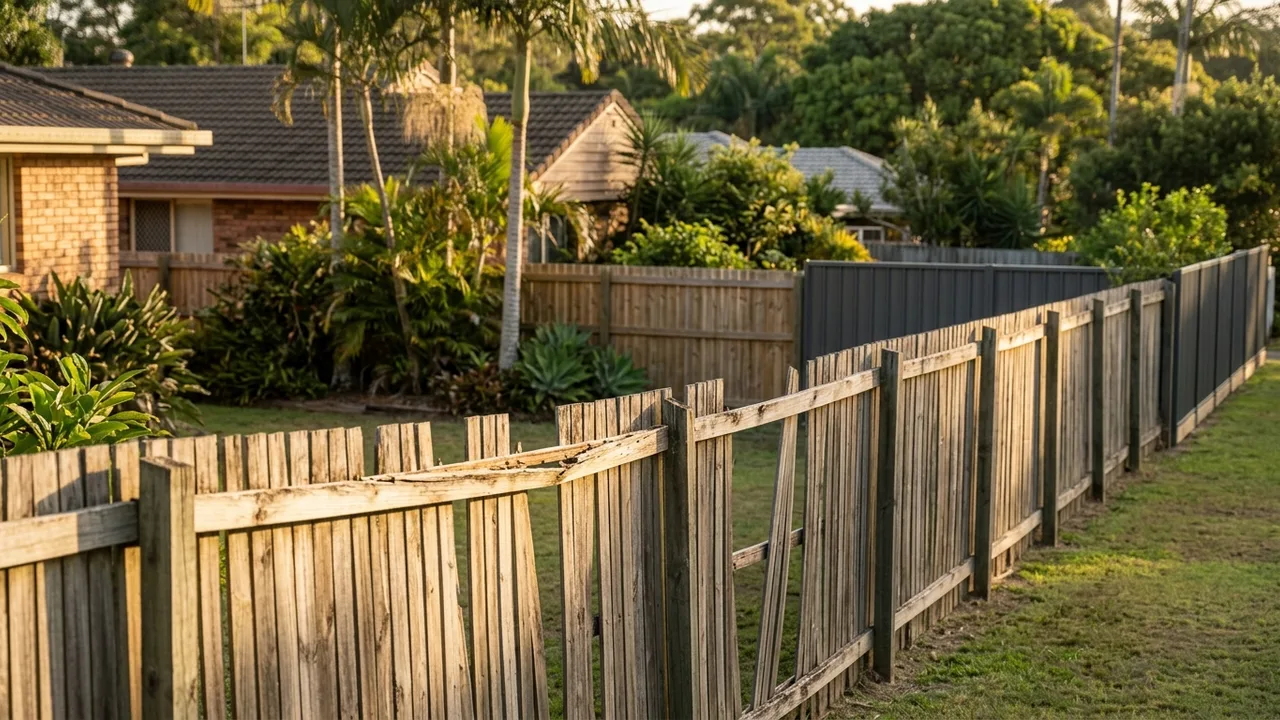
Colorbond panels can bow, lift at the base or lose fixings when wind gets underneath them. In most cases, a blown panel is replaceable without touching the rest of the fence. Posts are the vulnerability here too. If a Colorbond post has been driven into soft or sandy soil and the storm has rocked it, you'll see the fence leaning or sitting unevenly. Resetting or replacing a post is straightforward if caught early; it becomes harder if the lean has been left for a season and the surrounding soil has settled around it.
Powder-coated aluminium fencing, common for front yards and driveways in newer builds across Moorooka and Fairfield, is generally robust but can crack or bend at the rails if a tree limb lands squarely on it. Aluminium is repairable but matching powder coat colours on older sections can be tricky. If the fence is more than eight or ten years old and you are replacing a significant portion, it may be worth replacing the whole run to get a consistent finish.
Pool Fencing: Different Rules Apply
If your pool fence took storm damage, the repair-or-replace question is largely taken out of your hands. Queensland law requires pool barriers to comply with the relevant Australian Standard (currently AS 1926.1-2012 for most residential pools), and a damaged or displaced pool fence section must be made compliant before the pool can be used.
This is not an area to patch up and hope for the best. A non-compliant pool barrier puts you at legal risk and, far more importantly, is a genuine safety hazard. If your pool fence was damaged in the storm, get a proper assessment first and treat the repair as urgent. Brisbane City Council's pool safety requirements are specific about fence height, gaps, gate operation and non-climbability. Any repair or replacement needs to meet those standards, not just look tidy.
Getting the Cost Picture Right
Repair and replacement costs vary widely depending on access, fence length, material and whether any retaining or earthworks are involved. As a general frame of reference for Brisbane Inner West work:
- A single post replacement in a timber fence: typically $300 to $600
- Storm repairs to two or three Colorbond panels and posts: roughly $400 to $800
- Full replacement of a standard 20-metre timber paling fence: often $3,500 to $8,000 depending on hardwood vs pine, and site conditions
- Combined retaining and fence work on a sloped block: generally starts around $5,000 and can run higher for complex sites
These are indicative figures only. Quoted prices depend on materials, access (narrow side passages in older Indooroopilly and St Lucia properties add labour time), soil conditions, and current supplier pricing for timber and steel.
Get at least two written quotes and make sure each quote specifies what is included: materials, post depth, any concrete, removal of the old fence, and any council notification if required for boundary fences.
What to Do Right Now, Before You Call Anyone
A few practical steps before you pick up the phone.
First, document the damage thoroughly with photos. This is useful for insurance purposes and for giving tradespeople an accurate picture before they visit.
Second, check your home insurance policy. Storm damage to fencing is covered by many standard home and contents policies, but the excess may be higher than the repair cost for minor damage. It is worth a ten-minute read of the policy schedule.
Third, if the fence is on a shared boundary, talk to your neighbour before committing to a replacement. In Queensland, boundary fence costs can be shared under the Neighbourhood Disputes Resolution Act 2011, but only if both parties agree in writing to the work beforehand. Starting work without that agreement can create complications.
Finally, think about what you want the fence to do going forward. If the original timber fence was always marginal for privacy or security, a storm is sometimes an opportunity to upgrade to a material or style that better suits your needs.
The Bottom Line
If the structure is sound and the damage is isolated, repair. If the fence was already struggling before the storm, replacement is usually the better investment over a two to three year view. If you are unsure, a site visit from a qualified fencing contractor is the fastest way to get a reliable answer.
We connect homeowners in Indooroopilly and surrounding suburbs with local fencing providers who do this kind of assessment honestly. If you want a straight opinion on your fence before you commit to anything, that is a reasonable place to start.
Quick answers