Fencing guide
When is the best time of year to get fencing installed in Brisbane?
The short answer: autumn and early winter
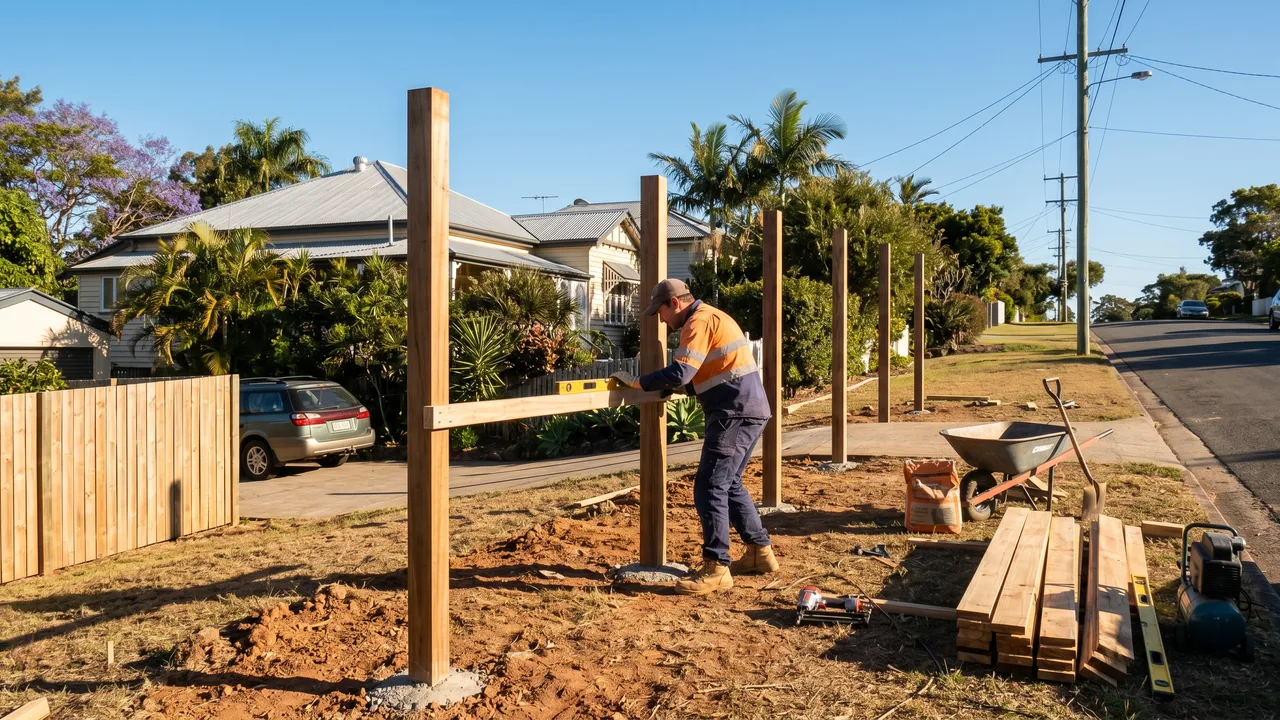
If you want the smoothest fencing experience in Brisbane, aim for April through July. The wet season has eased, the ground is firmer, trades are easier to book, and you're not racing against an incoming storm front. That said, the "best" time also depends on your fence type, your block, and what's driving the urgency.
Why Brisbane's seasons actually matter for fencing
Brisbane doesn't get four distinct seasons the way southern cities do, but the difference between December and May is real enough to affect a fencing project.
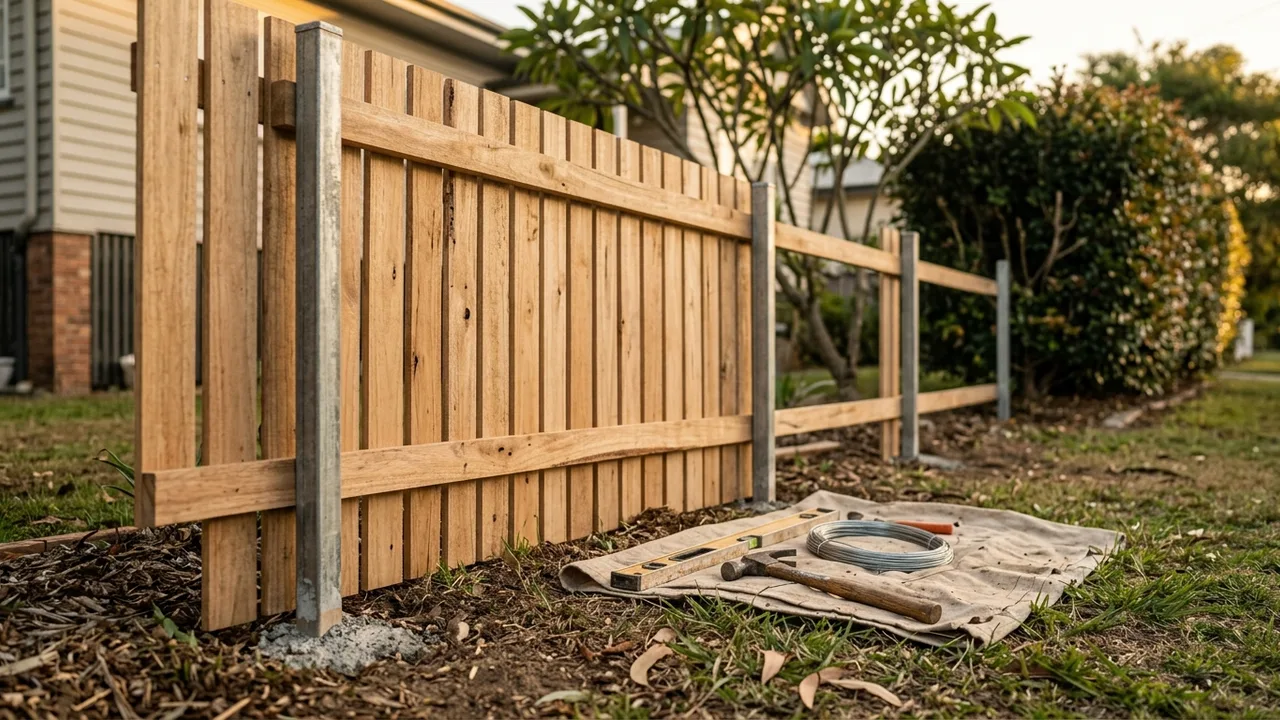
The wet season (roughly November to March) brings heavy rainfall, saturated soil, and the occasional severe storm. That combination creates a few practical problems:
- Concrete footings for timber posts need time to cure. Waterlogged ground slows curing and can compromise the structural bond, particularly in the clay-heavy soils common through Sherwood, Graceville, and Corinda.
- Timber fencing takes on moisture quickly when cut and installed. Treated pine and hardwood both handle humidity reasonably well long-term, but fresh cuts exposed to repeated rain before sealing can swell, warp, or take stain unevenly.
- Access on sloped blocks gets genuinely dangerous when soils are soft. Many properties in the Indooroopilly and Taringa area sit on steep, sometimes terraced blocks. Machinery, post-hole diggers, and material deliveries become harder to manage safely when the ground is sodden.
- Trades are stretched. Storm season generates a rush of fence repair and replacement jobs. A fence blown down in January competes with dozens of other urgent repairs. Lead times blow out and you have less leverage to schedule around your preferences.
None of this means you can't get fencing done in summer. Plenty of jobs go ahead without issue. It just means the variables are stacked against you.
The autumn-winter window: April to July
This is the practical sweet spot for most Brisbane homeowners.
Rainfall drops off noticeably from April onwards. Ground conditions across Inner West suburbs like St Lucia, Chelmer, and Yeronga stabilise. Days are warm and dry without being brutally hot, which matters for the trades doing the physical work and for materials like Colorbond steel, which can get unpleasantly hot to handle in the middle of a January afternoon.
From a scheduling perspective, this window is genuinely more relaxed. Work from the storm-damage rush has cleared. Trades are available to quote and start sooner. If you're installing pool fencing and need a certification inspection, getting an appointment with a pool safety inspector tends to be faster in the cooler months too.
There's also a cost angle worth considering. Fencing doesn't have dramatic seasonal price swings the way, say, air conditioning installation does. But when demand is lower, you're more likely to get a contractor who isn't rushing between jobs, which tends to mean better attention on your project.
Spring (August to October): still workable, but watch the calendar
Spring is a reasonable second choice. Conditions are dry, the ground has recovered from winter, and you still have a window before the wet season arrives.
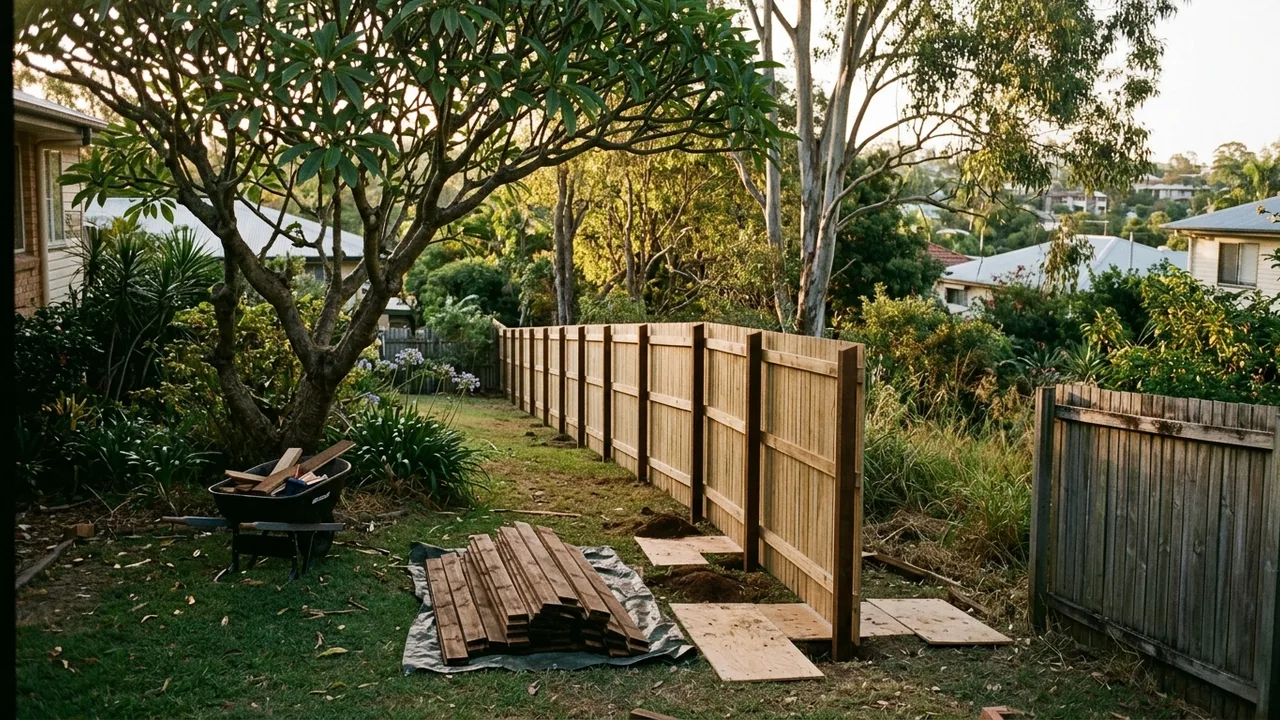
The catch is timing. If you're starting a project in September or October, you want it finished before November. Delays happen (material lead times, council approvals for certain retaining-and-fence combinations, or simply a busy trade calendar) and you don't want to be mid-installation when the first storm front rolls in.
One local quirk worth knowing: jacaranda season runs late October through November across much of inner Brisbane, including Indooroopilly and Fairfield. It's mostly irrelevant to fencing, but if you're painting or sealing a new timber fence and purple petals are dropping constantly, cleanup becomes annoying. Minor point, but worth a mention.
If your driver is street appeal before Christmas, spring is the window to target. Start getting quotes in August, confirm a contractor by September, and aim for an October completion.
Summer (November to March): high urgency only
If a storm has knocked your fence down, obviously you can't wait until April. Repairs and replacements happen year-round, and a good contractor will manage wet-season conditions if the job demands it.
For Colorbond steel fencing, summer is actually less problematic than for timber. Steel panels aren't going to absorb moisture or warp. The main issues are the access and footing-cure concerns mentioned earlier, plus the heat making site work harder for the crew.
For pool fencing, there's no good reason to delay on safety grounds regardless of season. Queensland pool safety legislation requires compliant barriers to be maintained. If you're buying a property with a non-compliant pool fence, you're legally required to address it quickly. Don't use "it's summer" as a reason to procrastinate on a compliance issue.
How your fence type shifts the timing calculation
Different materials have different sensitivities to Brisbane's climate.
Timber (hardwood and treated pine). Most sensitive to wet conditions during installation. A quality install in a dry window, followed by proper sealing, will serve you well for many years. Avoid scheduling the job for a week when rain is forecast every day.
Colorbond steel. More forgiving on timing. The panels themselves don't care about moisture. Footings and posts still need to cure, but overall this is a lower-risk material choice for wet-season installs if you're pressed.
Aluminium fencing. Similar story to Colorbond. Powder-coated aluminium handles Brisbane's humidity and salt air (relevant if you're in the bayside suburbs, less so in the Inner West) without issues year-round.
Glass pool fencing. Glass panels and their stainless or aluminium hardware are weather-neutral during installation. The key concern is getting compliant posts and footings set correctly, which again comes back to ground conditions and curing time.
Retaining and boundary combinations. These are the most complex jobs to time. Many Inner West blocks require engineered retaining walls combined with fencing, particularly in Indooroopilly and Taringa where block gradients can be significant. Retaining walls need stable ground and proper drainage. Wet season is genuinely the wrong time for this type of work. Plan these projects for autumn or early winter without exception.
A practical timeline for getting it right
Here's a simple way to think about it if you're planning ahead rather than reacting to damage:
- Decide in July or August. Work out what you want: material, height, approximate lineal metres, whether you need council approval for any part of the job.
- Get quotes in August or September. Aim for at least two or three quotes so you can compare honestly. Typical installed fencing in Brisbane runs anywhere from $2,000 for a straightforward repair or section replacement up to $15,000 or more for a full boundary fence with retaining components on a complex block.
- Confirm and schedule in September. This gives you a comfortable lead time for an October or early November completion, well before the wet season.
- If you've missed the window, wait for April. Trying to rush a non-urgent project through February rarely ends well. The job costs the same and the conditions are worse.
If you're in the Inner West suburbs (Indooroopilly, Sherwood, Graceville, Chelmer and surrounds), blocks with significant slope add time to every job. Factor that into your timeline.
Closing thought
There's no single universally correct answer here, because a lot depends on what's driving the project. Urgency after storm damage overrides timing preferences. Pool compliance issues don't wait for ideal weather. But if you have the luxury of planning ahead, autumn through early winter gives you the best combination of dry conditions, available trades, and unhurried scheduling.
Getting quotes costs nothing and takes less time than most people expect. If you're thinking about fencing somewhere in the April-to-July window, start the conversation a couple of months before you want the work done. That's usually all the lead time you need.
Quick answers